In short
- Challenge
- Obesity, diabetes and kidney problems are frequent in cats but hard for owners to manage, often while they are away from home.
- Solution
- An app that runs three devices, a GPS collar, a food and water dispenser and a smart toy, with alerts that follow each condition.
- Delivered
- A high-fidelity prototype in Figma, from onboarding to device pairing, meal plan, toy and notifications.
01 · The problem
Common conditions, poorly managed
Obesity, diabetes and kidney problems are frequent in cats but hard for owners to manage.
Meals at precise times, enough water, regular movement, often while the owner is away.
Three cats, three needs
- 01 Diabetic
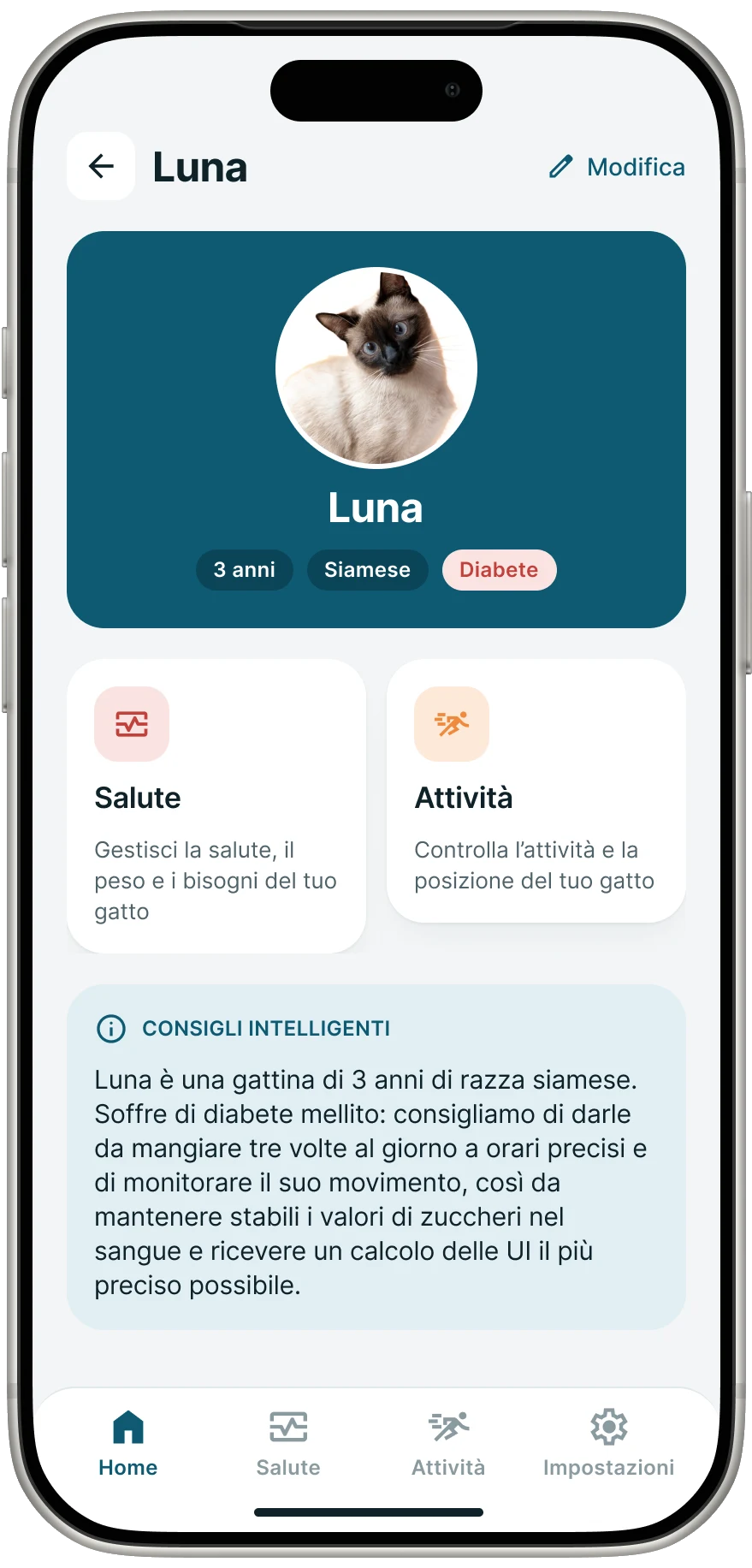
A stable, predictable routine: precise portions at scheduled times.
- 02 Kidney
Often does not drink enough: water must be encouraged and measured.
- 03 Obese
Small, frequent portions and play that makes it “earn” its food.
Cats never touch the app, but their needs shape the whole system.
02 · The research
An expert interview and twelve products
Notes from the expert interview
An interview with an expert gave concrete requirements. Twelve products were analysed: GPS collars, smart feeders, toys and pet apps. None addressed these conditions together.
- 01 Collar
It has to be small and thin.
- 02 Obesity
Kibble at different times every day: the app sets random meal times.
- 03 Diabetes
Three meals a day at precise times agreed with the vet, and regular movement to monitor.
- 04 Kidneys
Colourful balls or ice in the fountain to catch the cat’s attention and make it drink.
- 05 Smart toy
Coloured lights or small butterflies to get the cat moving.
Requirements that came from the conversation.
Twelve products analysed
- 01 PetSafe FroliCat Bolt
- 02 Wicked Ball by Cheerble
- 03 Purrfect Paws Cat Toy
- 04 Weenect Cats
- 05 Tractive GPS Cat
- 06 Kippy
- 07 PetSafe Smart Feed
- 08 Catit PIXI Smart Feeder
- 09 SureFeed Microchip Feeder
- 10 Veterinario Salute Cane Gatto
- 11 11pets
- 12 Pezz
Toys, GPS collars, smart feeders and pet apps: none handled these conditions together.
03 · The choices
From the first sign-in to the daily check
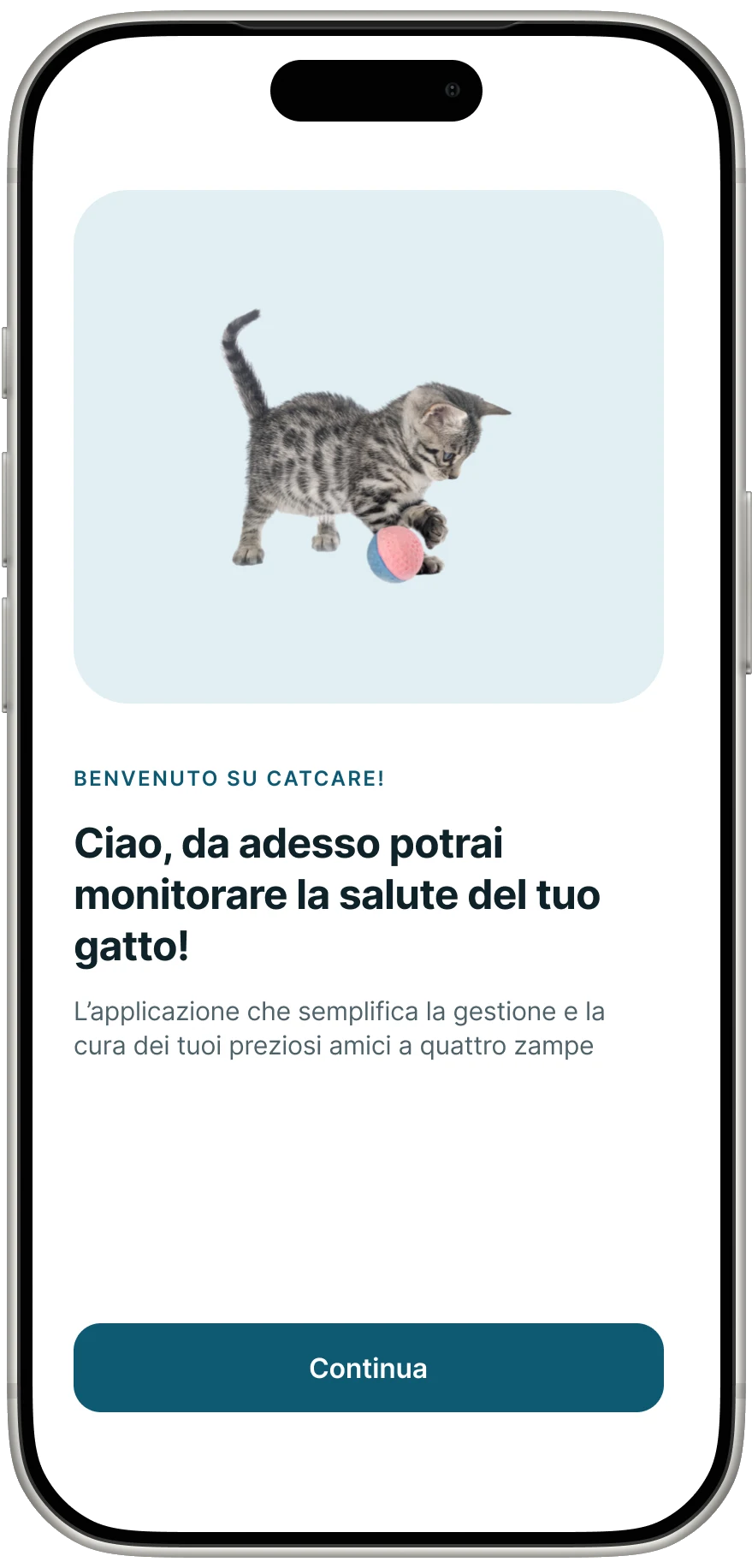
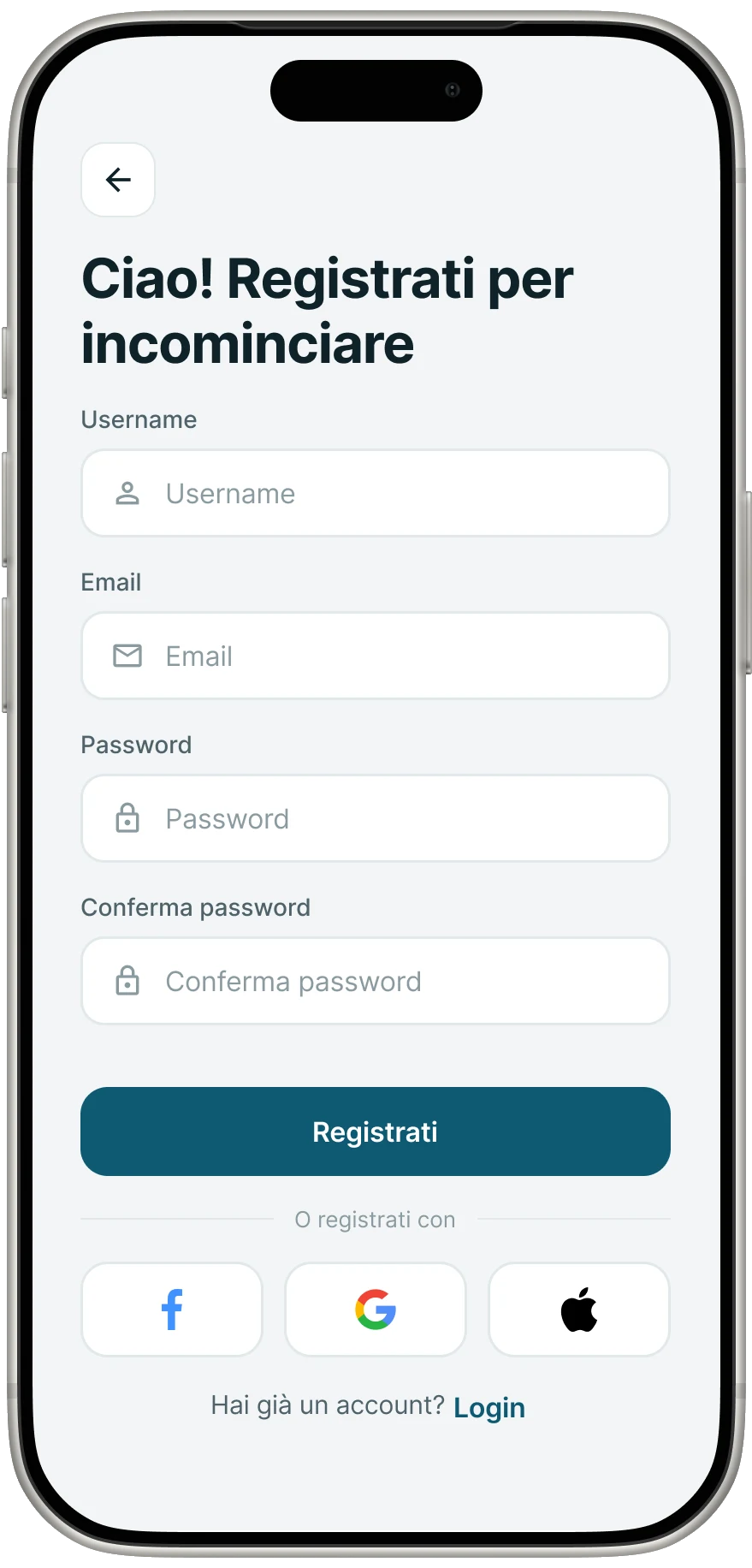
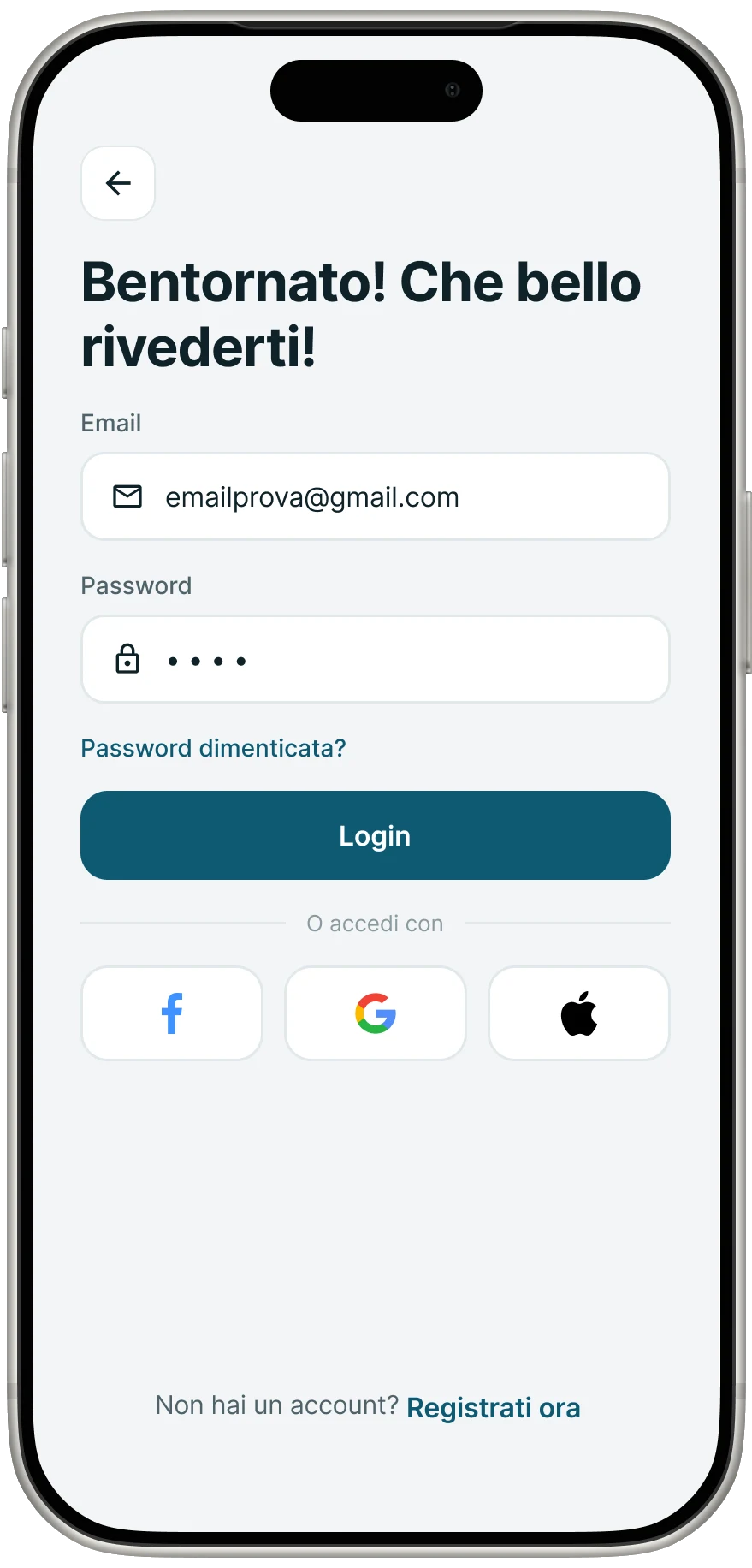
- 01Sign in
Account or guest, also with Google, Apple or Facebook
- 02Devices
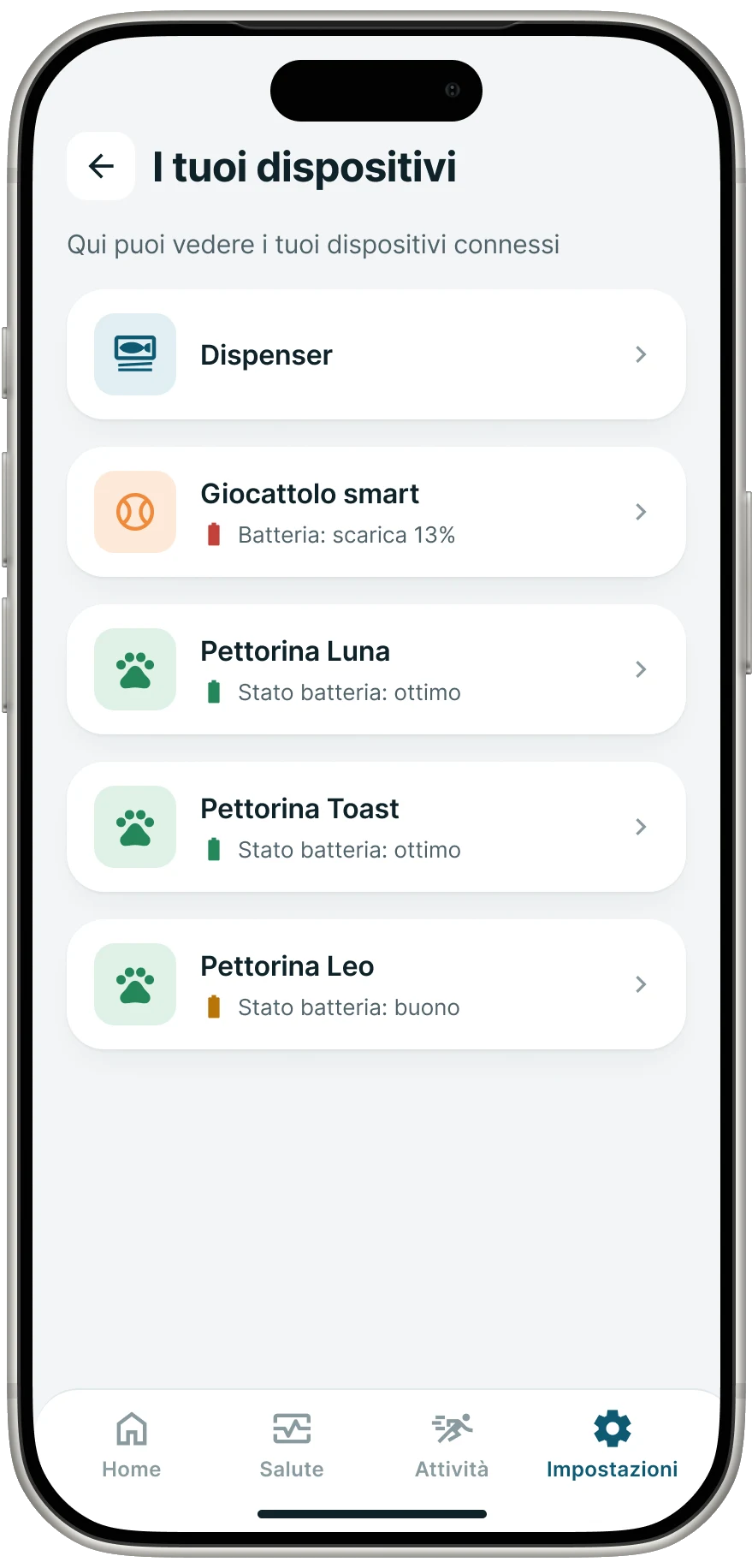
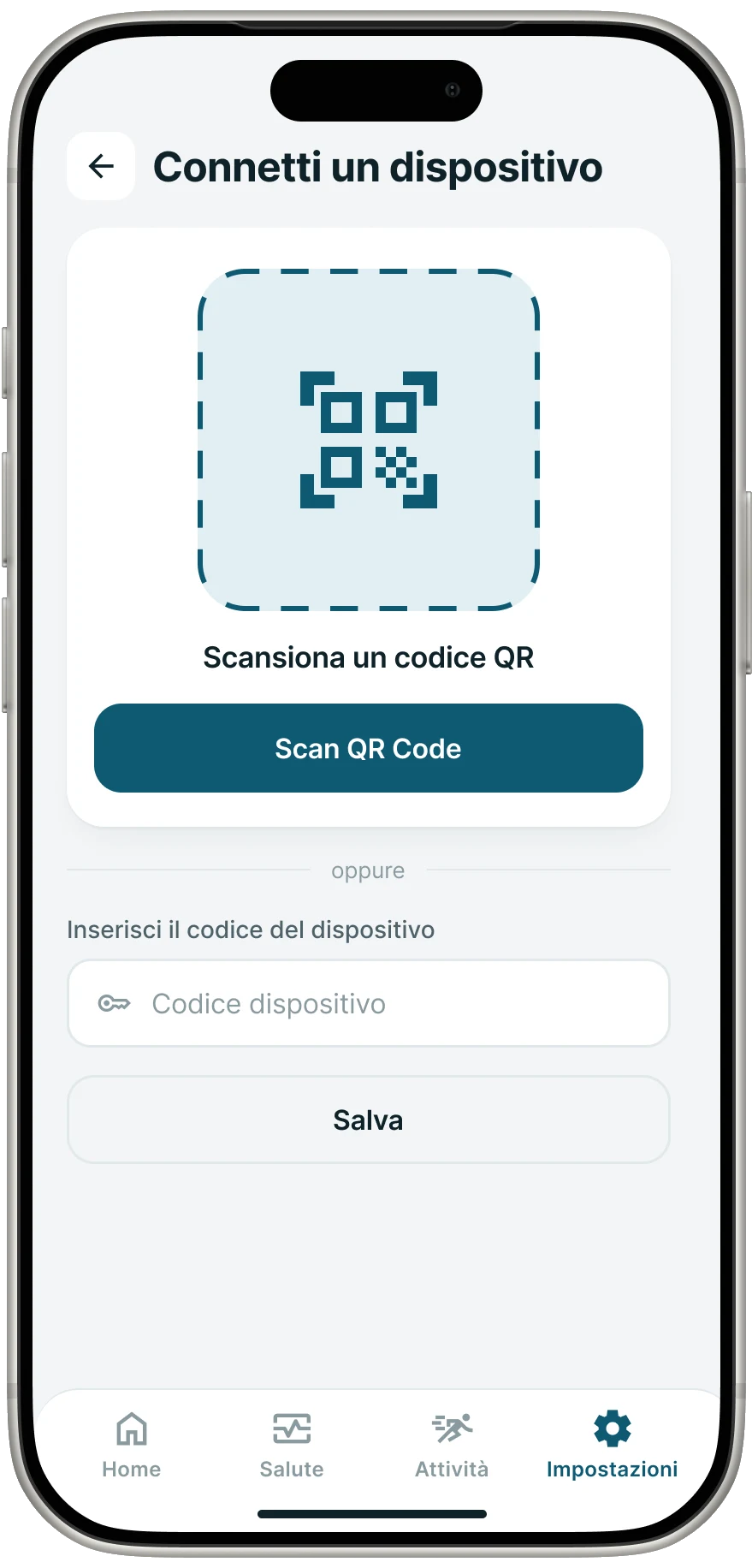
GPS collar, feeder and toy pair with a QR code
- 03The cat
Name, age, breed, weight and conditions: diabetes, kidneys, obesity
- 04Goals
Water, food, calories and insulin doses tailored to the cat
- 05My cats
Home with alerts and quick actions for feeder and toy
- 06Health and activity
Weight over time, movement and live location
From the user flow map: from the first sign-in to the daily check.
04 · The project
An app that runs an ecosystem
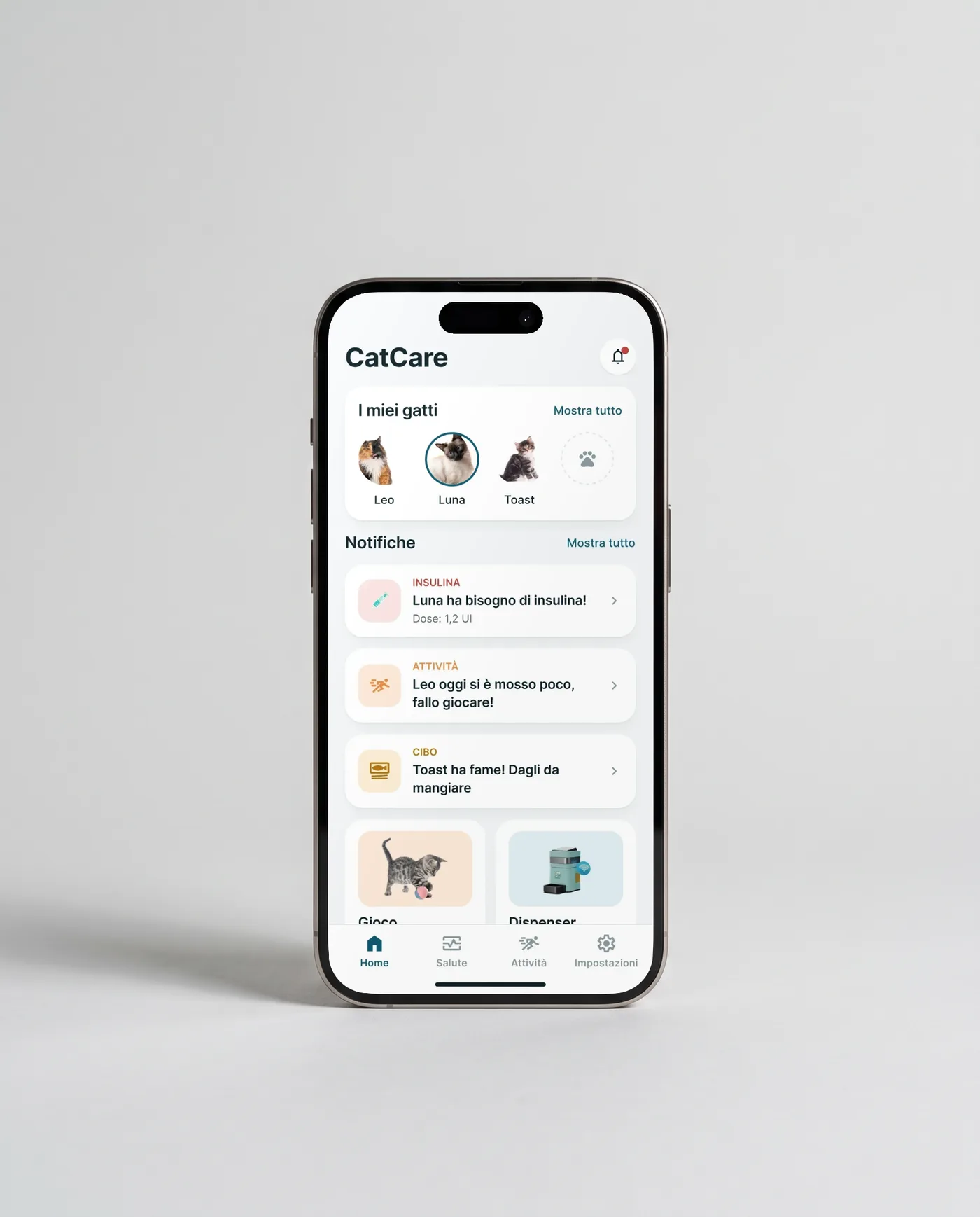
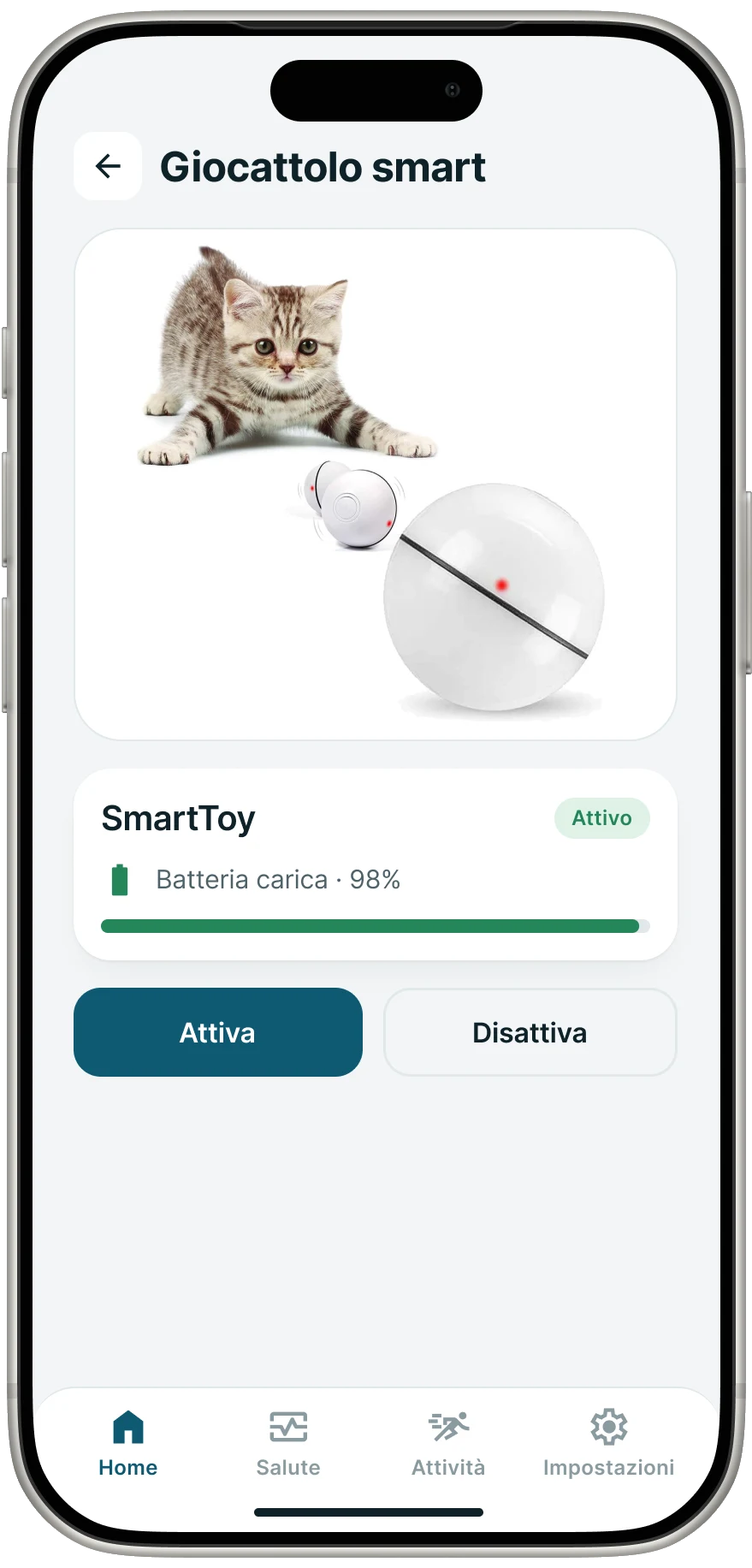
The app configures and reads three devices: a GPS collar, a food and water dispenser and a smart toy. Alerts follow each condition: too little water for a kidney cat, a missed calorie target for an obese cat, excessive movement for a diabetic one.
- 01 Home
- 02 Health
- 03 Meal plan
01/03 Home
What needs action comes first
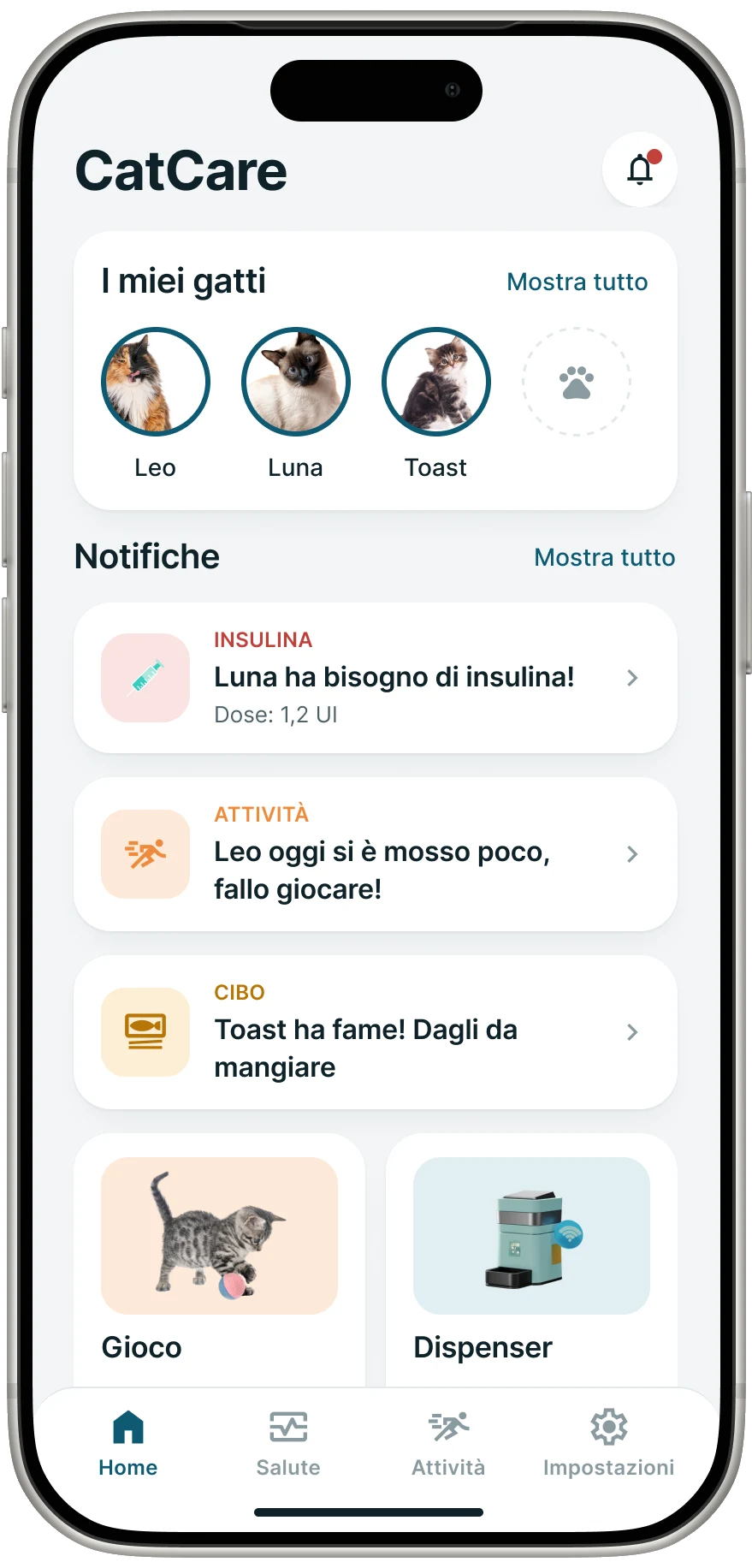
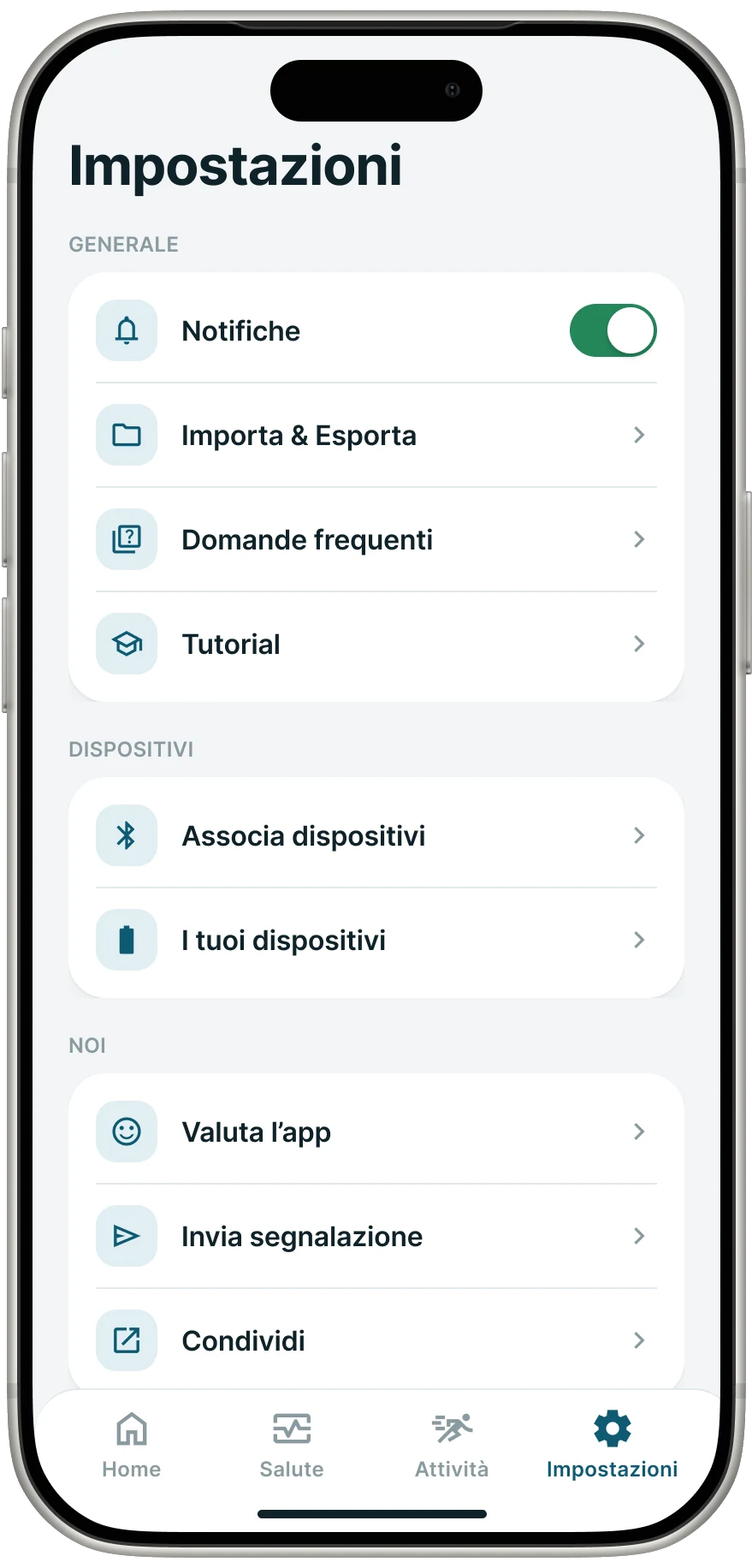
Home opens on your cats and on the notifications that need a response (insulin, activity, food), then gives direct access to the toy and the dispenser. Four tabs split the app into Home, Health, Activity and Settings.
- Your cats
- Act now
- Devices
02/03 Health
Health you can read at a glance
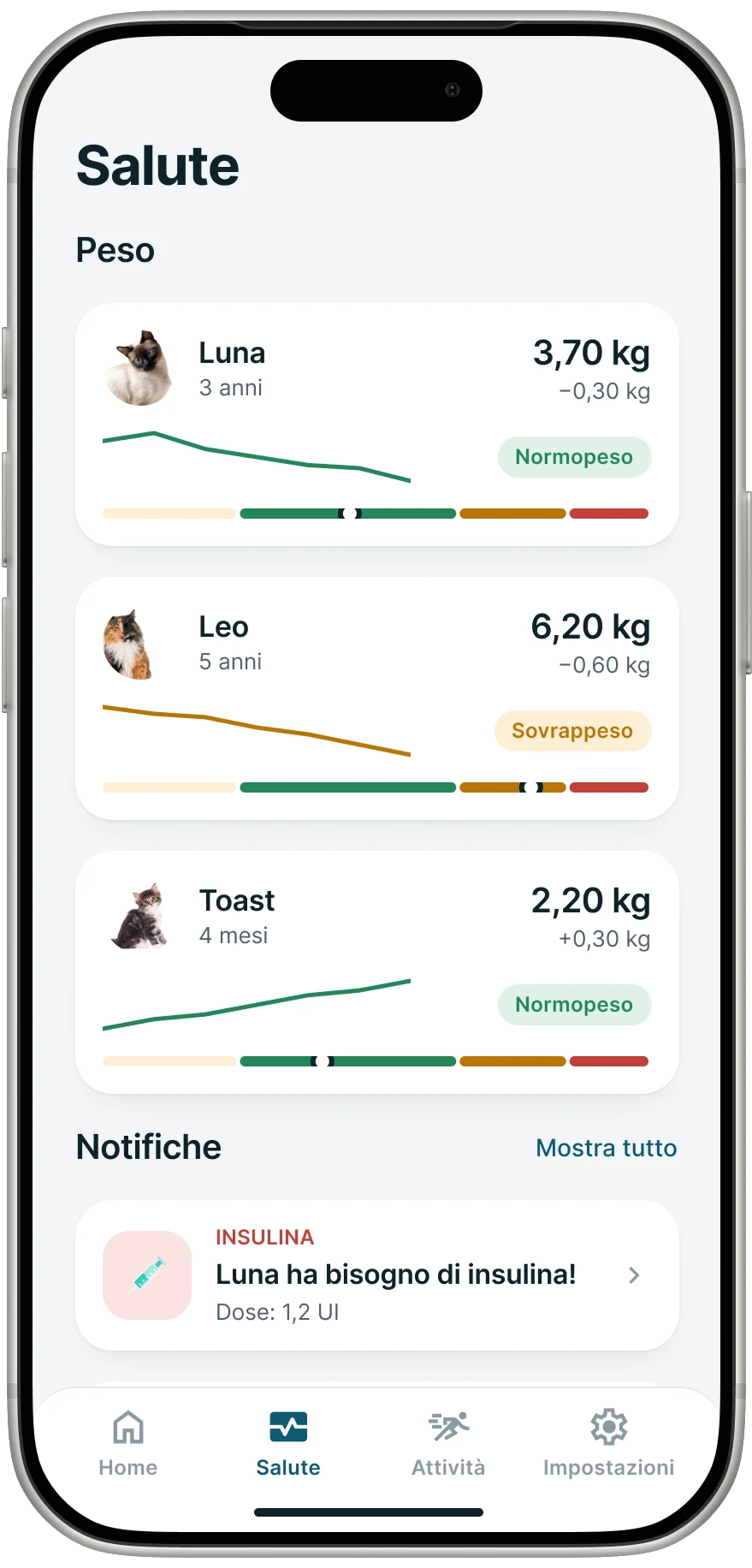
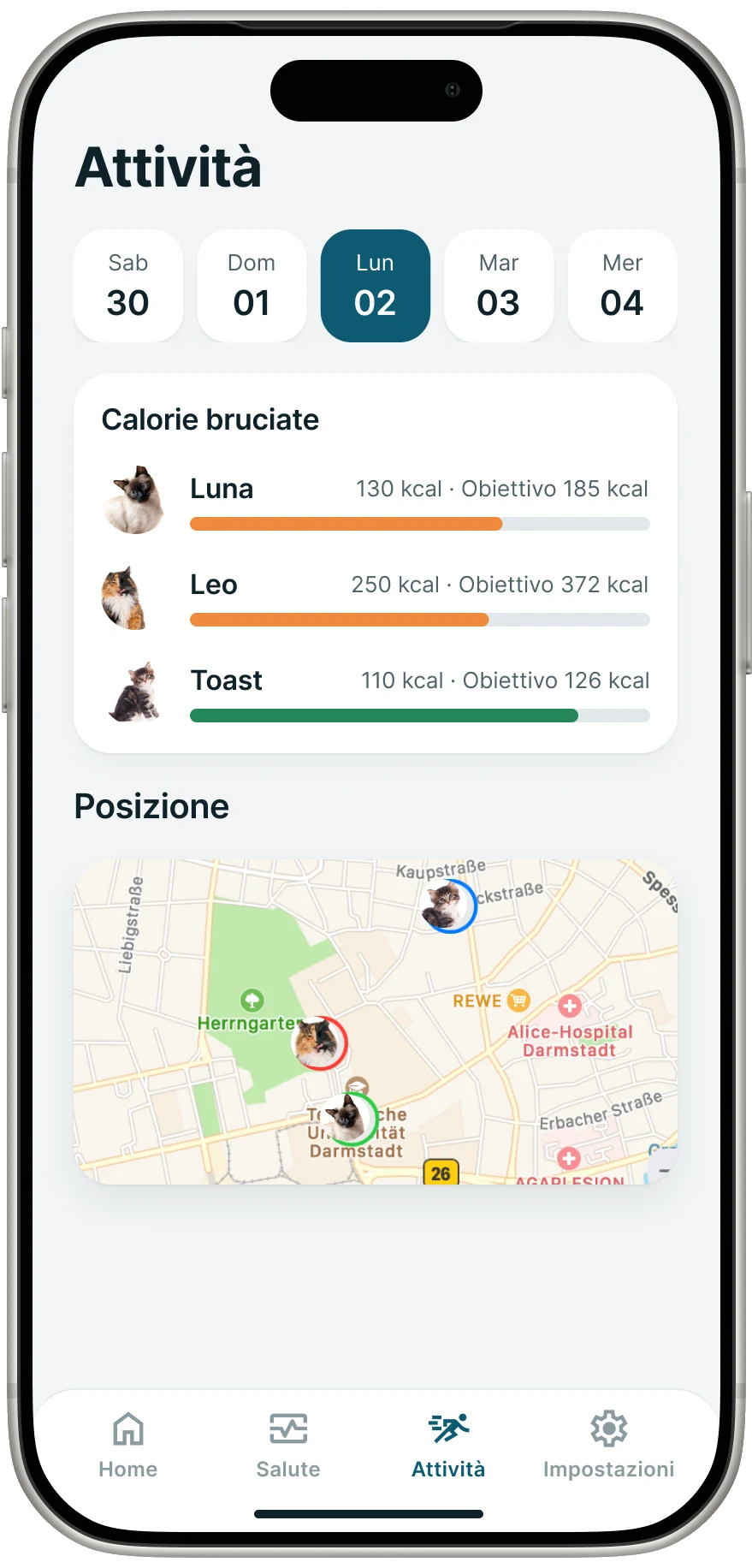
Weight per cat against a healthy range, calories against the daily target, and the cat’s position from the collar: data turned into a status the owner understands.
- Healthy weight range
- Alerts by condition
- Where your cats are
03/03 Meal plan
A routine you can set and trust
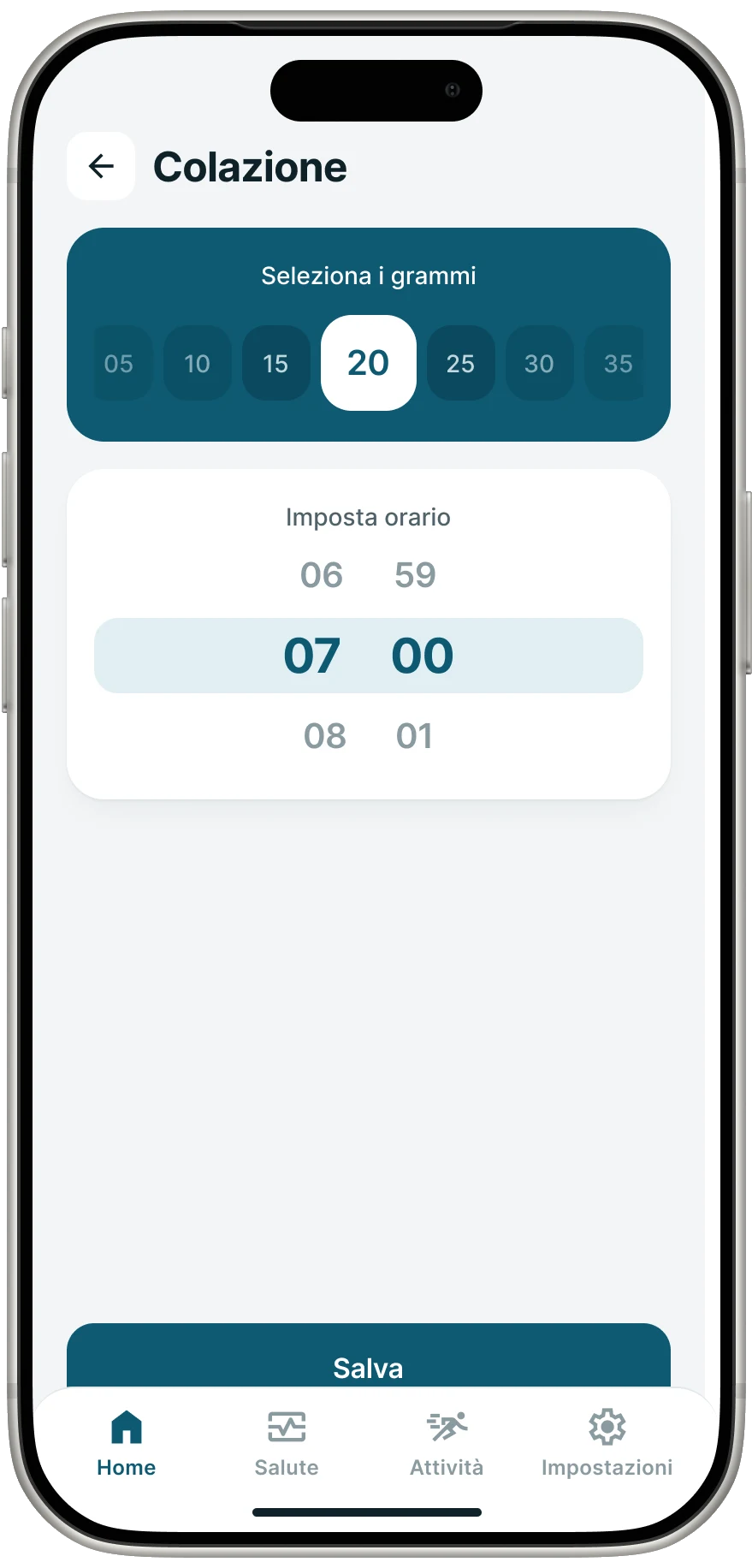
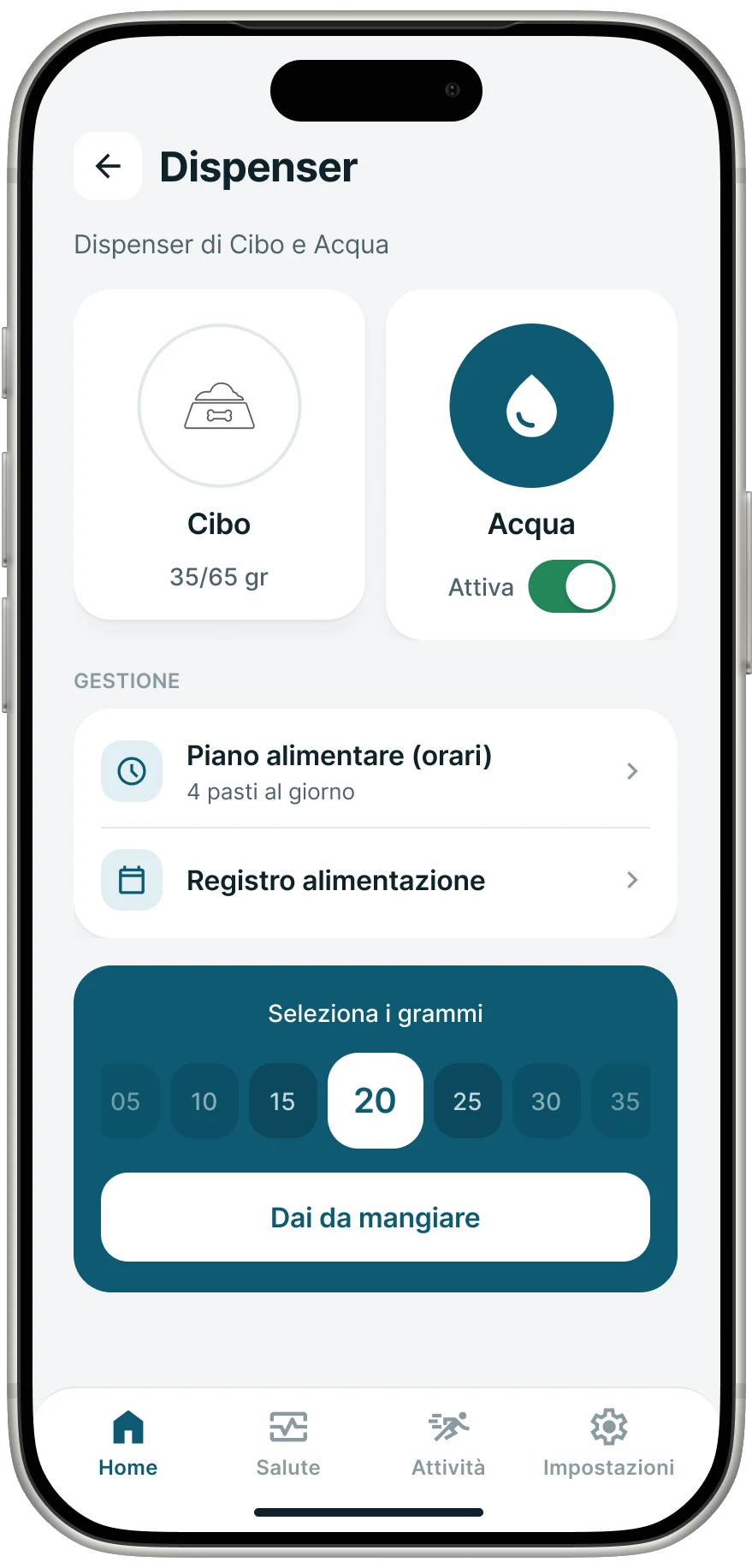
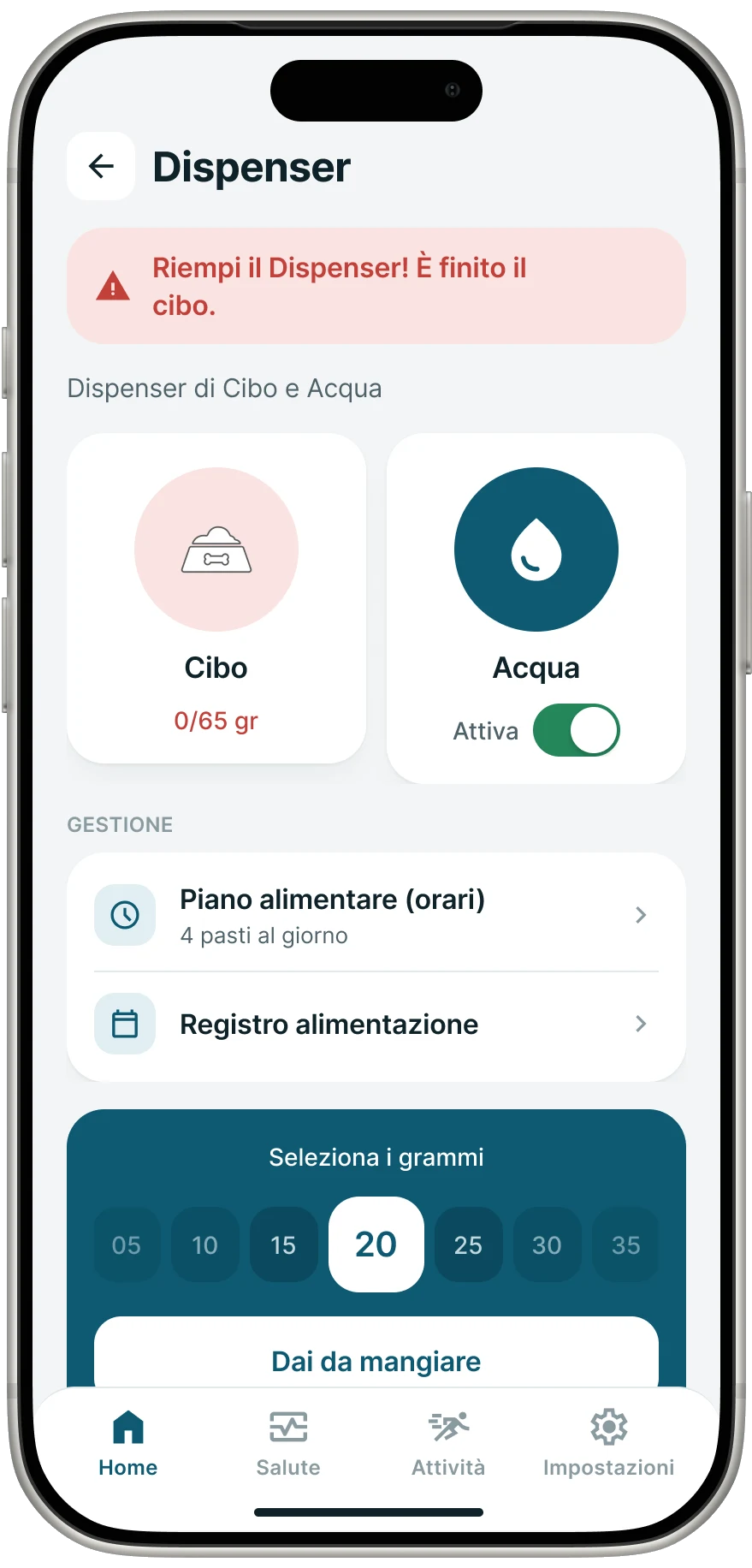
Meals are scheduled with time and grams and switched on or off one by one; the dispenser can also serve on demand.
- Meal time
- Portion in grams
- Alert when the food runs out
05 · The outcome
A complete flow, from start to devices
What I delivered
A high-fidelity prototype in Figma covering onboarding, login and recovery, home, health, activity, settings, device pairing, dispenser, meal plan, toy and notifications.
What I learned
Here I learnt to look for the gap before drawing: none of the twelve products compared handled these conditions together, and the expert interview turned that gap into concrete requirements. It was also my first encounter with the ergonomics of an interface: designing for an owner who checks the phone in a hurry, often away from home.