All work

(03/05)University orientation app

​​

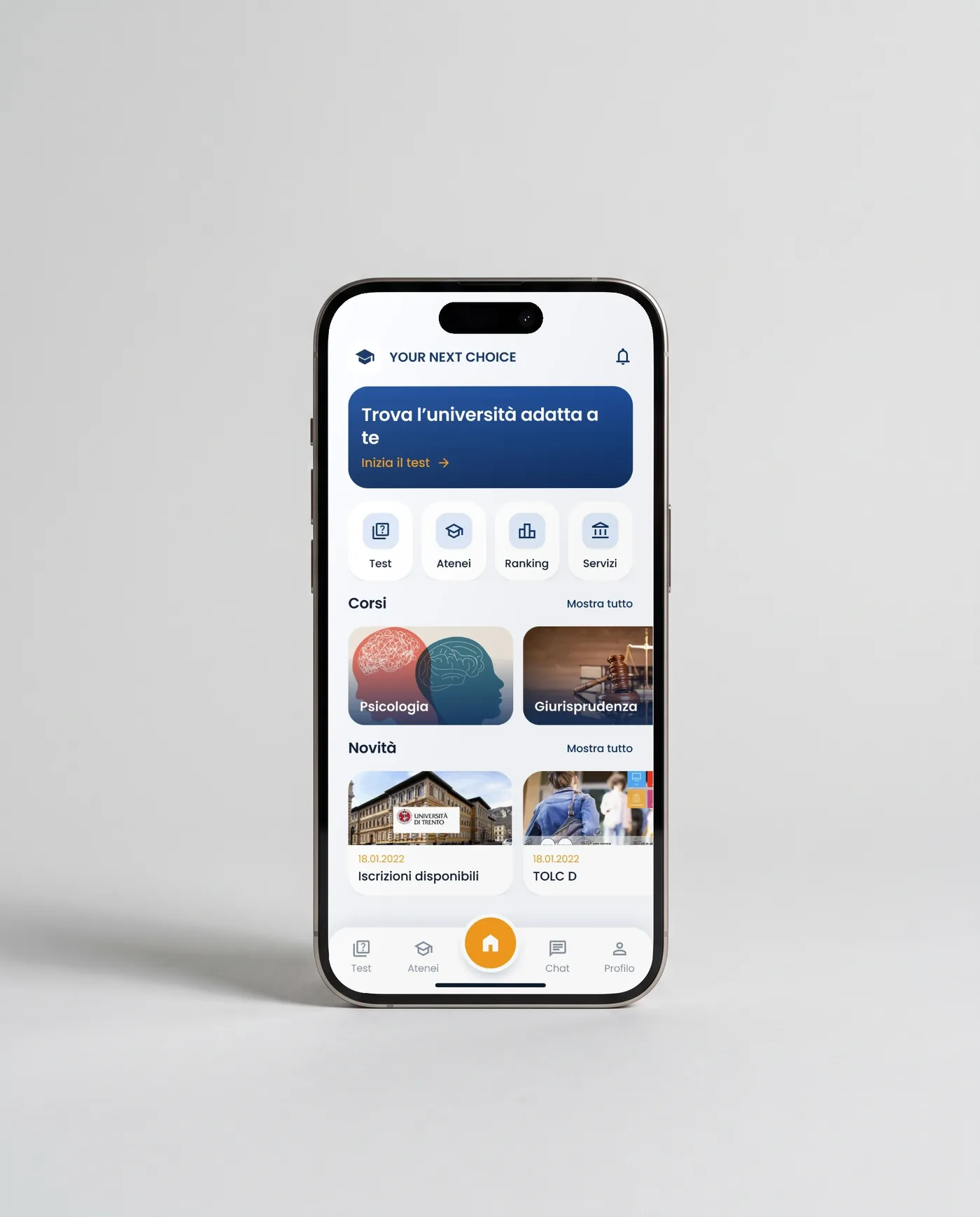
Helps final-year high-school students choose a university: a personalised test, entry-exam guidance, campus services and a chat with current students.

A.Y.
2024
Context
Semiotica della rappresentazione visiva (Semiotics of Visual Representation) · Sociologia della comunicazione (Sociology of Communication)
Methods
Questionnaire (17 first-year students) and 4 semi-structured interviews, Client-Problem-Solution cycles and problem reframing, Value Proposition Design, fit analysis
Tools
Figma, Framer
Grade
30/30 cum laude

In short

Challenge
Orientation tests and open days are generic, and a significant number of students change faculty in their first year.
Solution
An app that suggests a university from a personal test, then explains its entry test and services and opens a chat with current students.
Delivered
One orientation journey, from the first question to the chat with a current student, with a flyer and a QR code to download the app.

01 · The problem

Choosing a university, alone

Many final-year students feel confused before this choice: orientation tests and open days are generic, and a significant number change faculty in the first year.

A difficulty I had lived through myself became the starting point.

02 · The research

What the students told us

Questionnaire and interviews

Questionnaire with 17 first-year students and 4 semi-structured interviews, March–April 2025.

  1. 94.1%

    chose mainly out of passion for the subjects

  2. 76.5%

    want more information on real job opportunities

  3. 35.3%

    still have doubts about their choice

  4. 35.3%

    found their school’s guidance not very effective, or useless

  5. 23.5%

    trust students’ stories on social media most (17.6% trust official university information)

In their words

  • “The information they gave us was SO MUCH, and all scattered.”
  • “I never understood where I had to go to find what I needed.”
  • “Talk to university students, but directly, personally.”
  • “Nobody ever explained to us how university websites really work.”
  • “Putting my thoughts in order helped me.”

From the interviews, translated from Italian.

Customer profile

Jobs, pains and gains

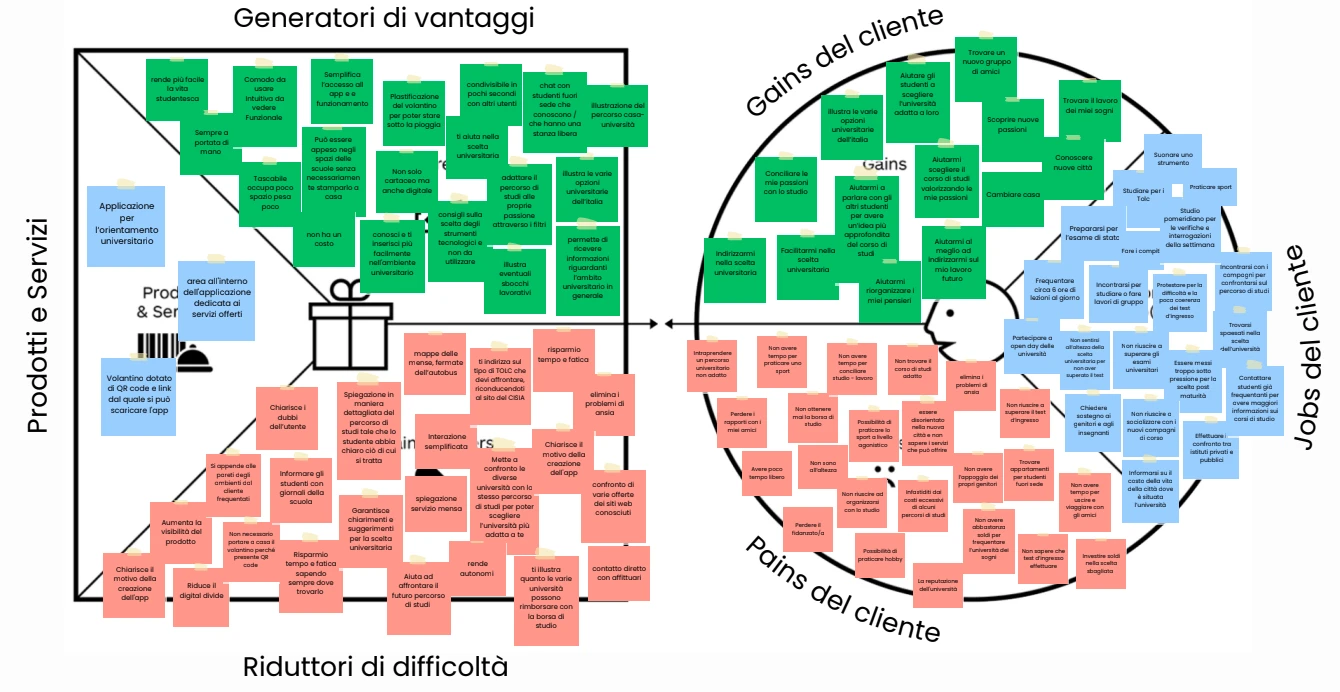
Value Proposition Design mapped what students do, fear and hope for, from failing the entry test to finding a home in a new city, then measured the fit between pain relievers, gain creators and products.

Jobs

  1. Six hours of lessons a day, then study for tests
  2. Prepare for the state exam and the TOLC admission tests
  3. Talk about school and the future with their parents
  4. Ask students already enrolled about their courses

Pains

  1. “I’m afraid I’ll start a degree that isn’t right for me”
  2. “…that I’ll invest money in the wrong choice”
  3. “…that my parents won’t share my choice”
  4. Not knowing which admission test to take

Gains

  1. Guidance in choosing a university
  2. Combining passions and study
  3. Talking with other students to understand a course
  4. Help to put my thoughts in order

Value Proposition Design for students in their last two years of high school, in order of importance.
Value map

From needs to the product

The Value Proposition Design became a value map: jobs, pains and gains turned into products and services, pain relievers and gain creators. The products are the app, the chat with current students, the guide to services and the flyer.

Value map of YourNextChoice: sticky notes for gain creators, pain relievers and products on the left, gains, pains and jobs of the student on the right.

The value map: gain creators and pain relievers on the left, the student profile on the right.

03 · The choices

Reframing the problem, four times

  1. 01Final-year students

    Problem: orientation tests mean little. Solution: change the tests.

  2. 02Final-year students

    Problem: the tools are simple and generic. Solution: keep them up to date.

  3. 03The specialists who write the tests

    Problem: they are not up to date. Solution: refresher courses.

  4. 04The institutions that provide the tests

    Problem: few resources and skills for their staff. Solution: investment.

  5. 05Back to fourth- and fifth-year students

    The real client: from here, Value Proposition Design.

Client-Problem-Solution cycles: each cycle questions the one before, until the real client is back.

04 · The project

From the first question to a current student

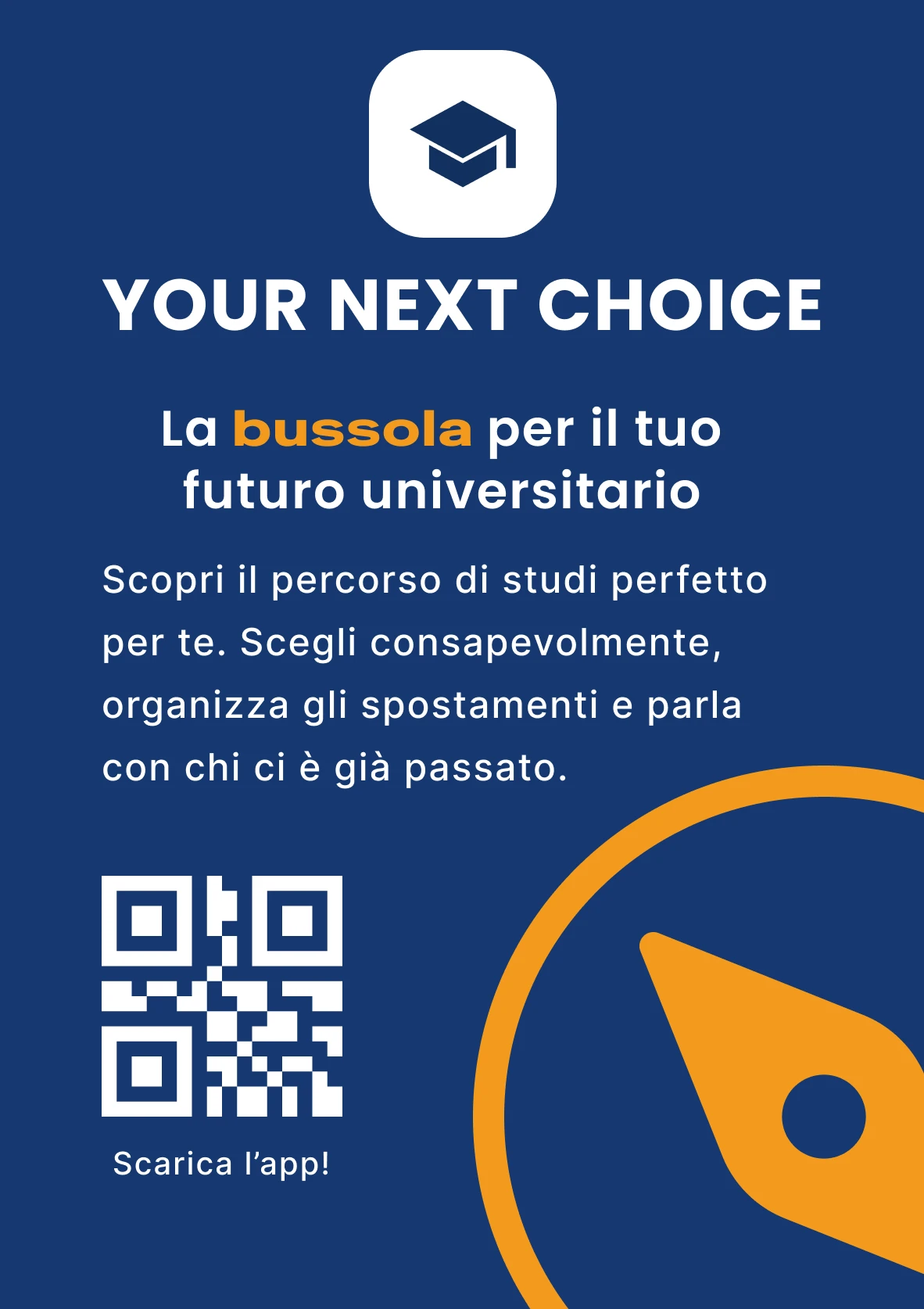
The same identity, a compass with a graduation cap, carries the app and the flyer with the QR code to download it.

The YourNextChoice flyer: on a blue ground, the graduation-cap logo, the line “La bussola per il tuo futuro universitario”, a QR code to download the app and an orange compass.

01/03 Test

A test that explains its answer

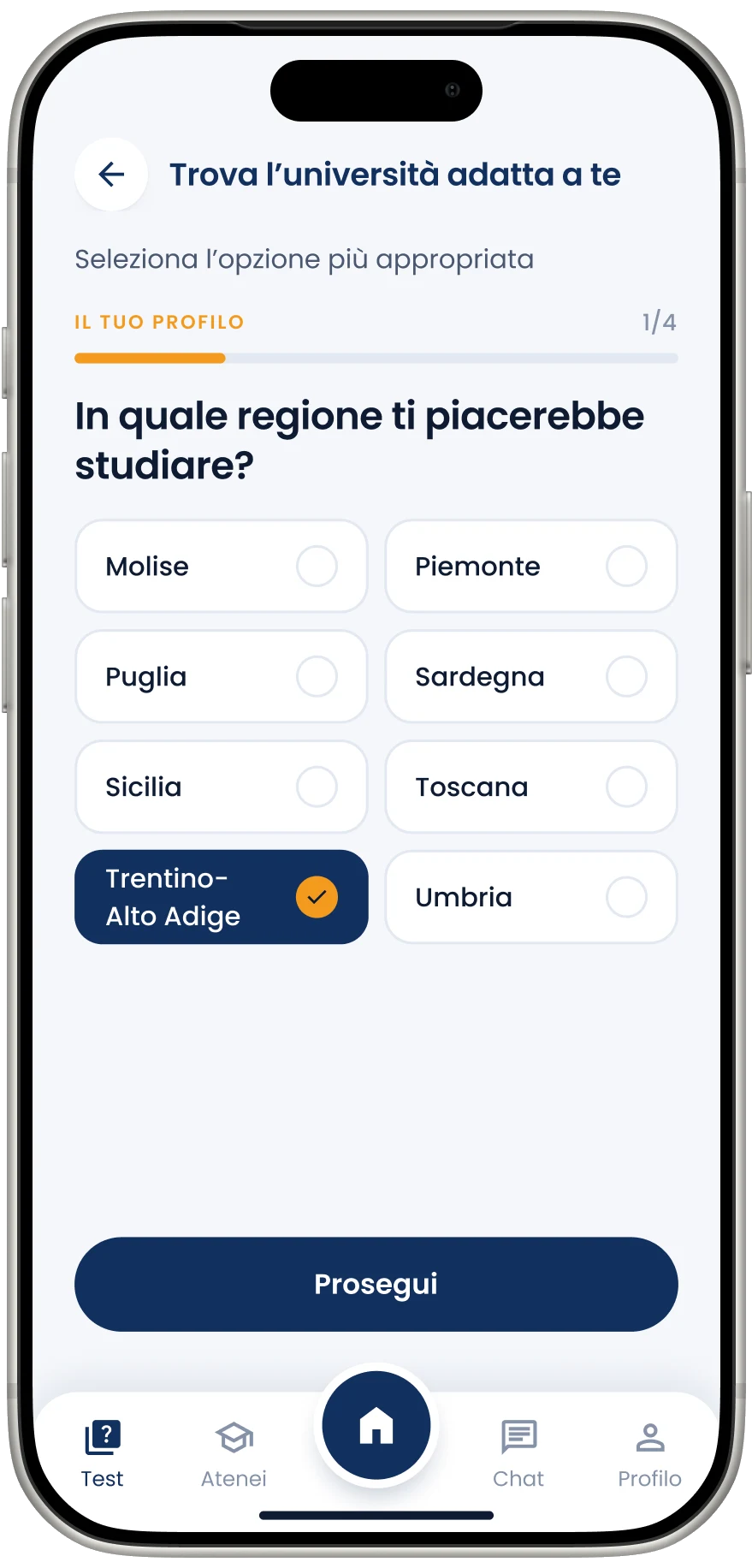
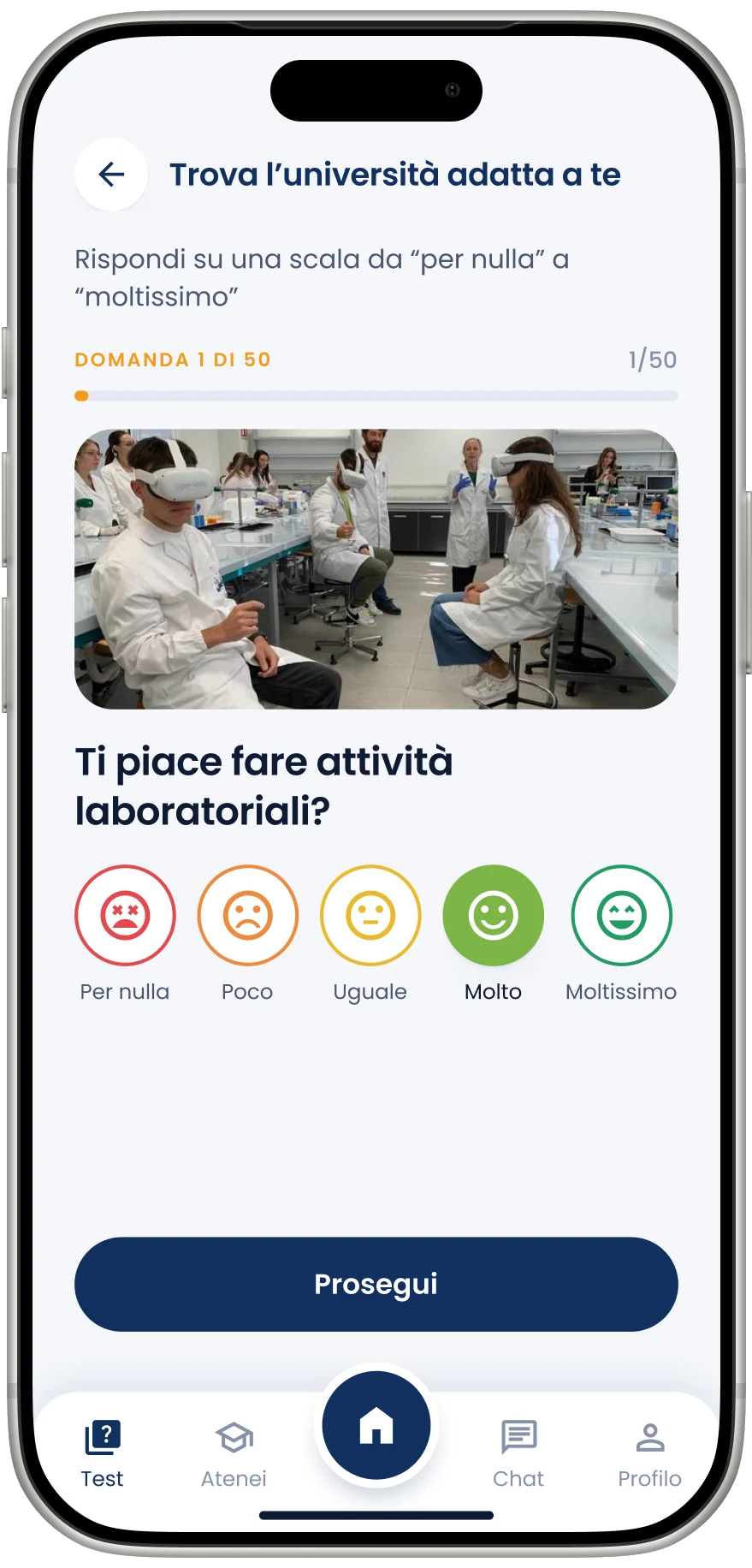
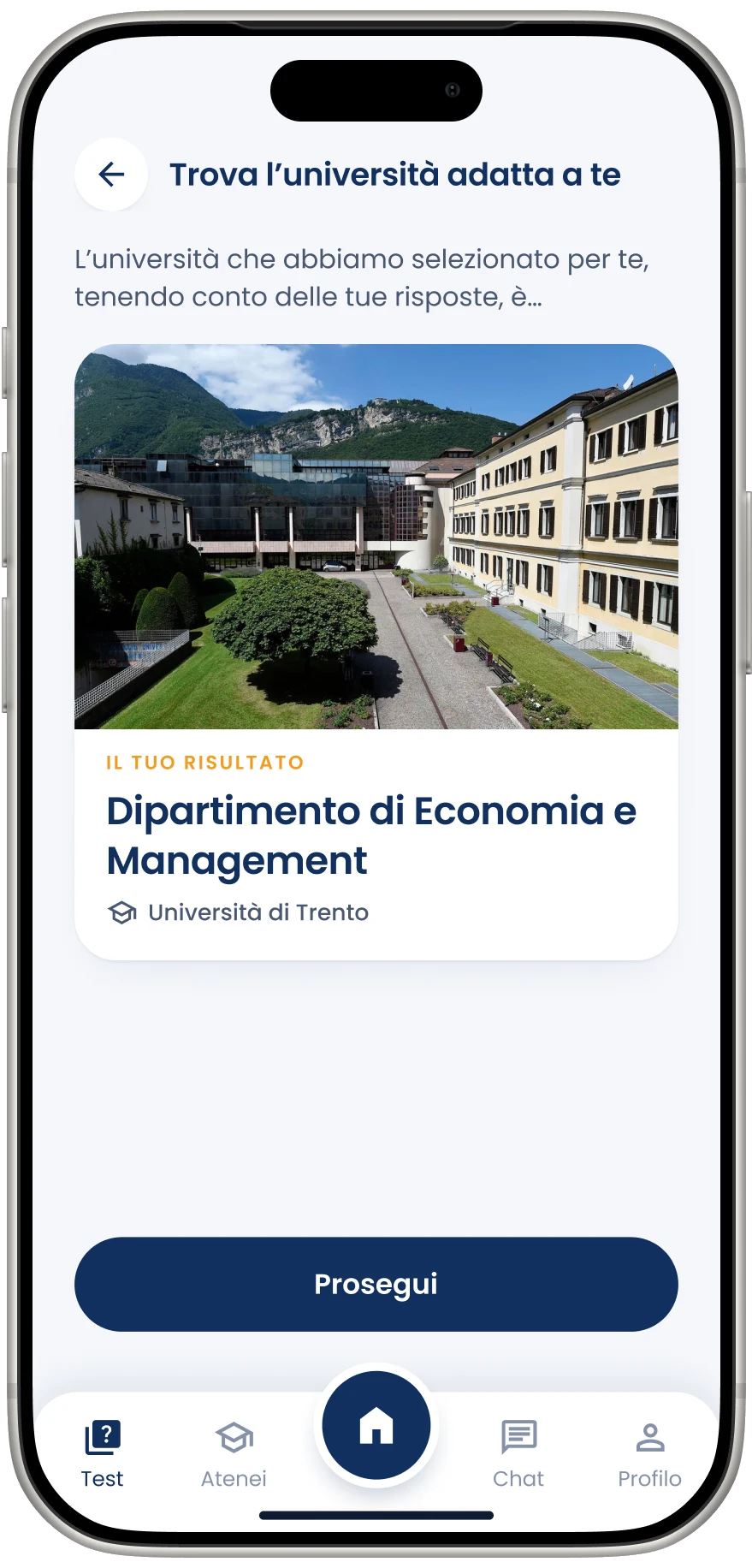
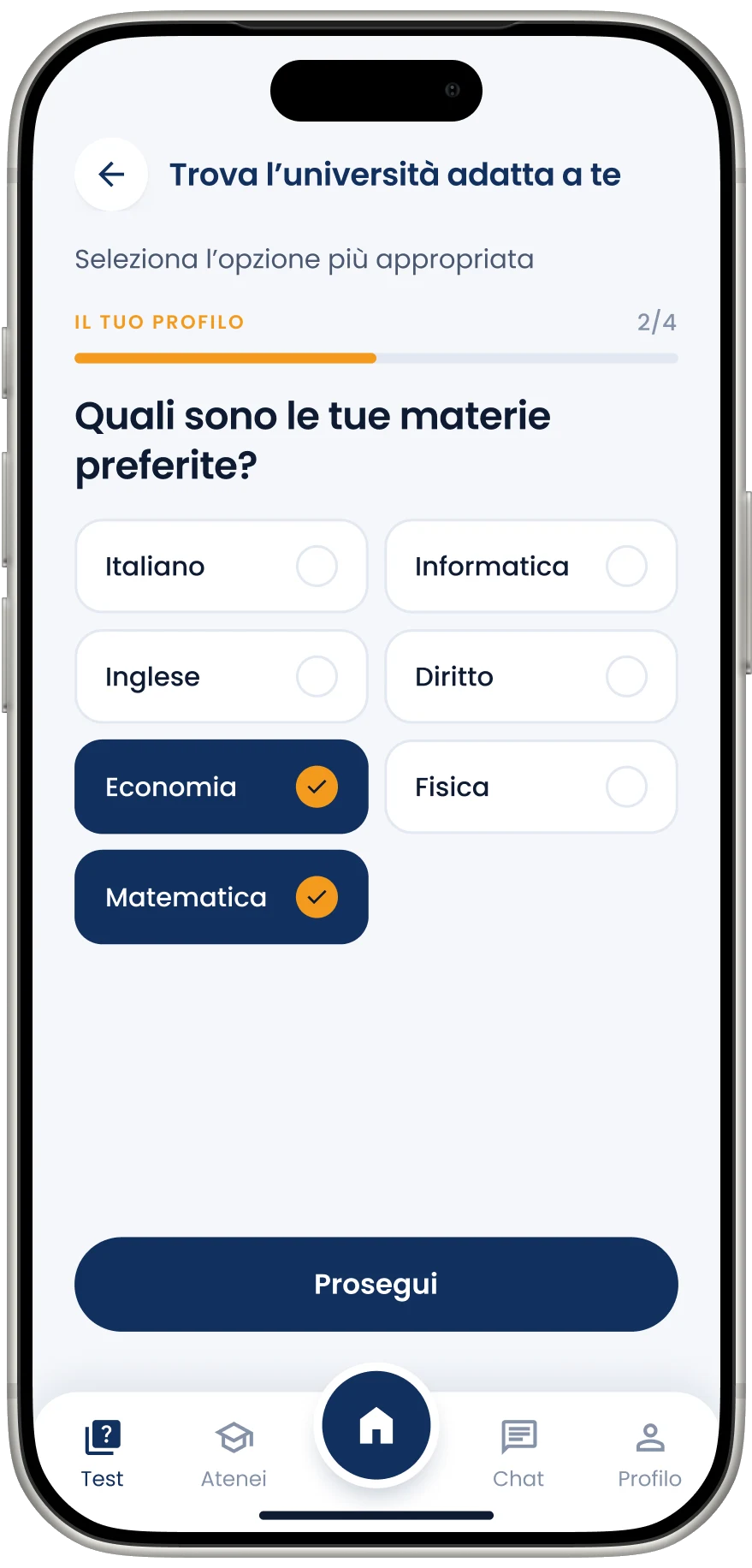
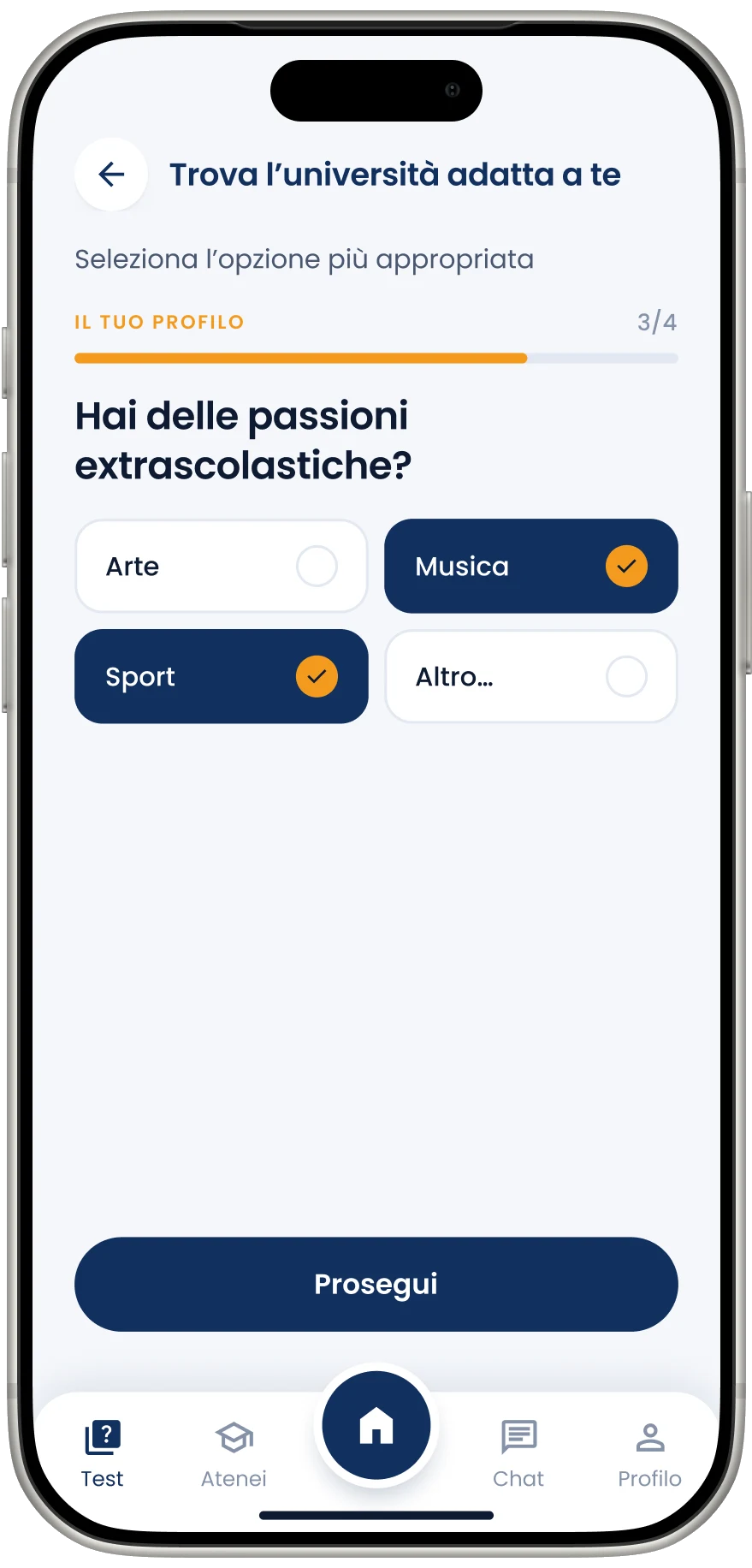
Fifty questions in four areas, on a five-step scale, lead to a suggested university with a short description and a link to its official site.

  1. Your profile first: region, subjects, passions
  2. One question at a time, on a five-step scale
  3. The suggested university, with a short description

02/03 University

Beyond the choice: tests, services, people

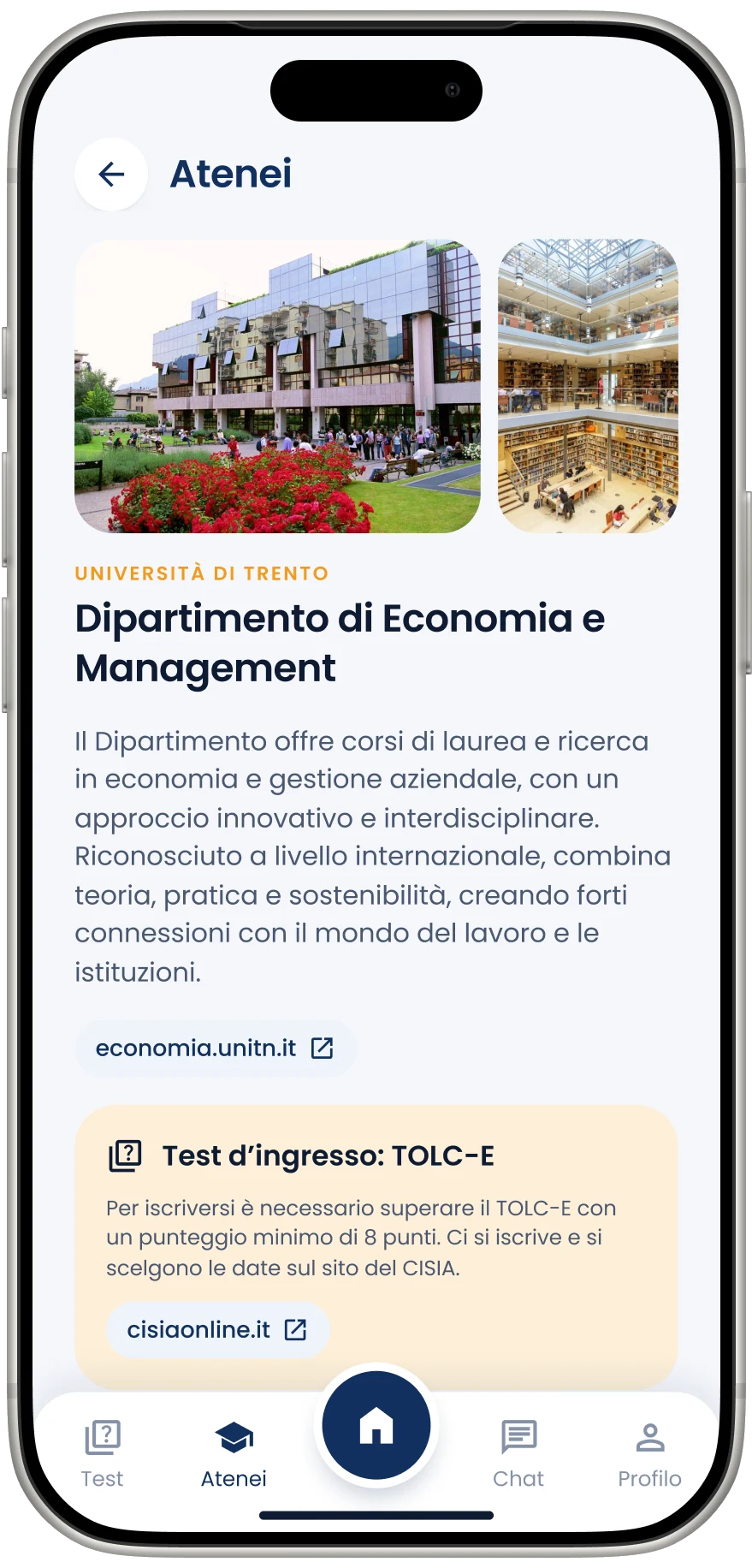
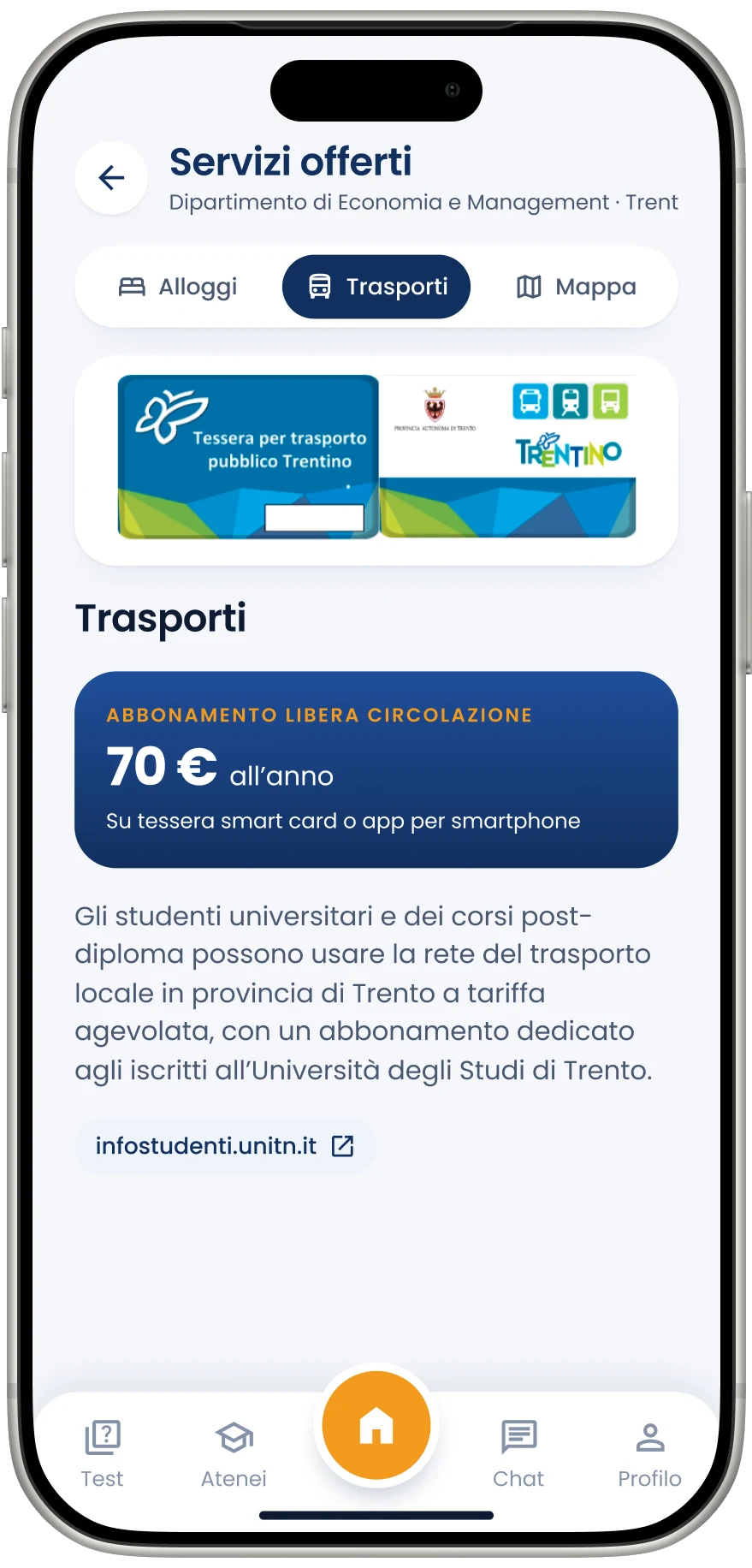
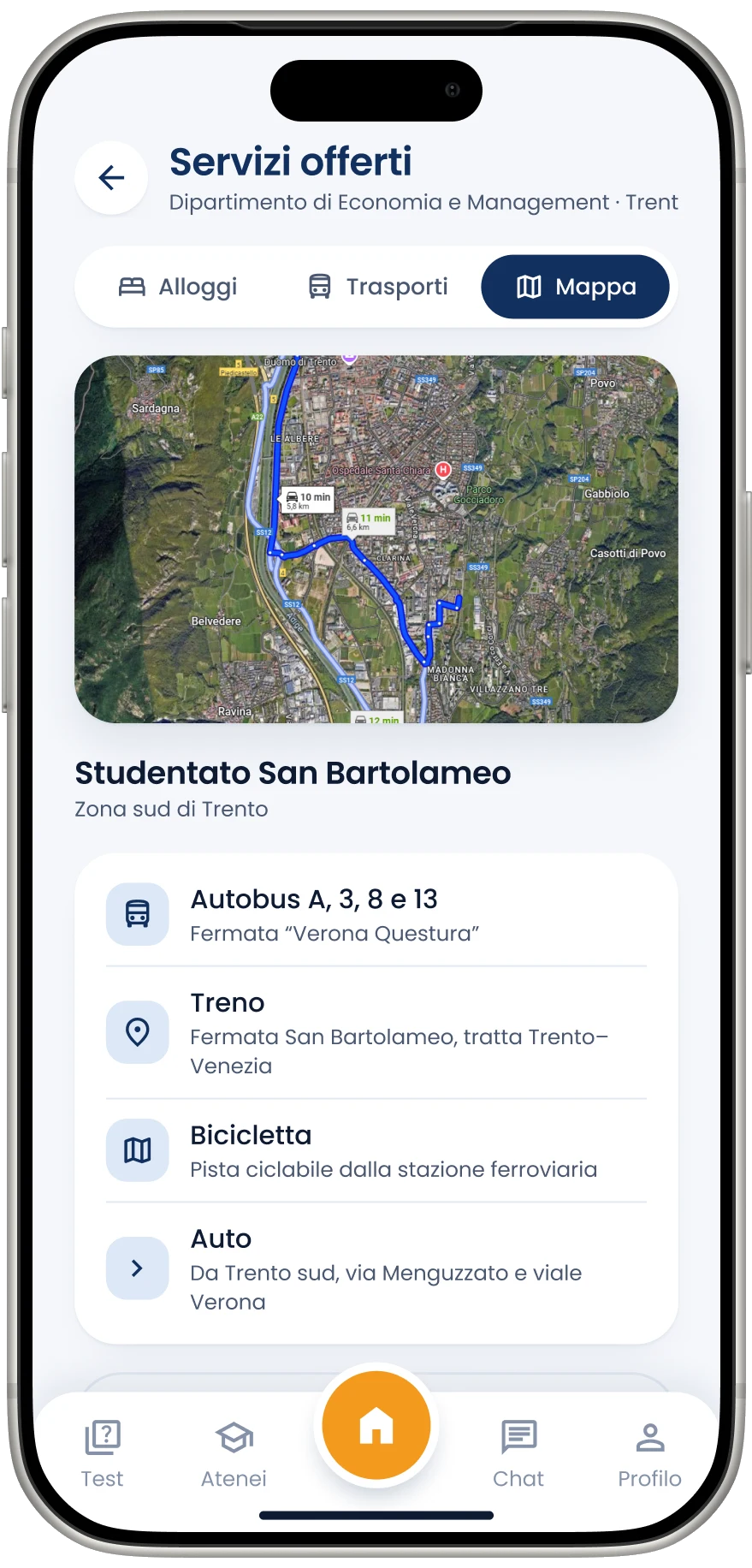
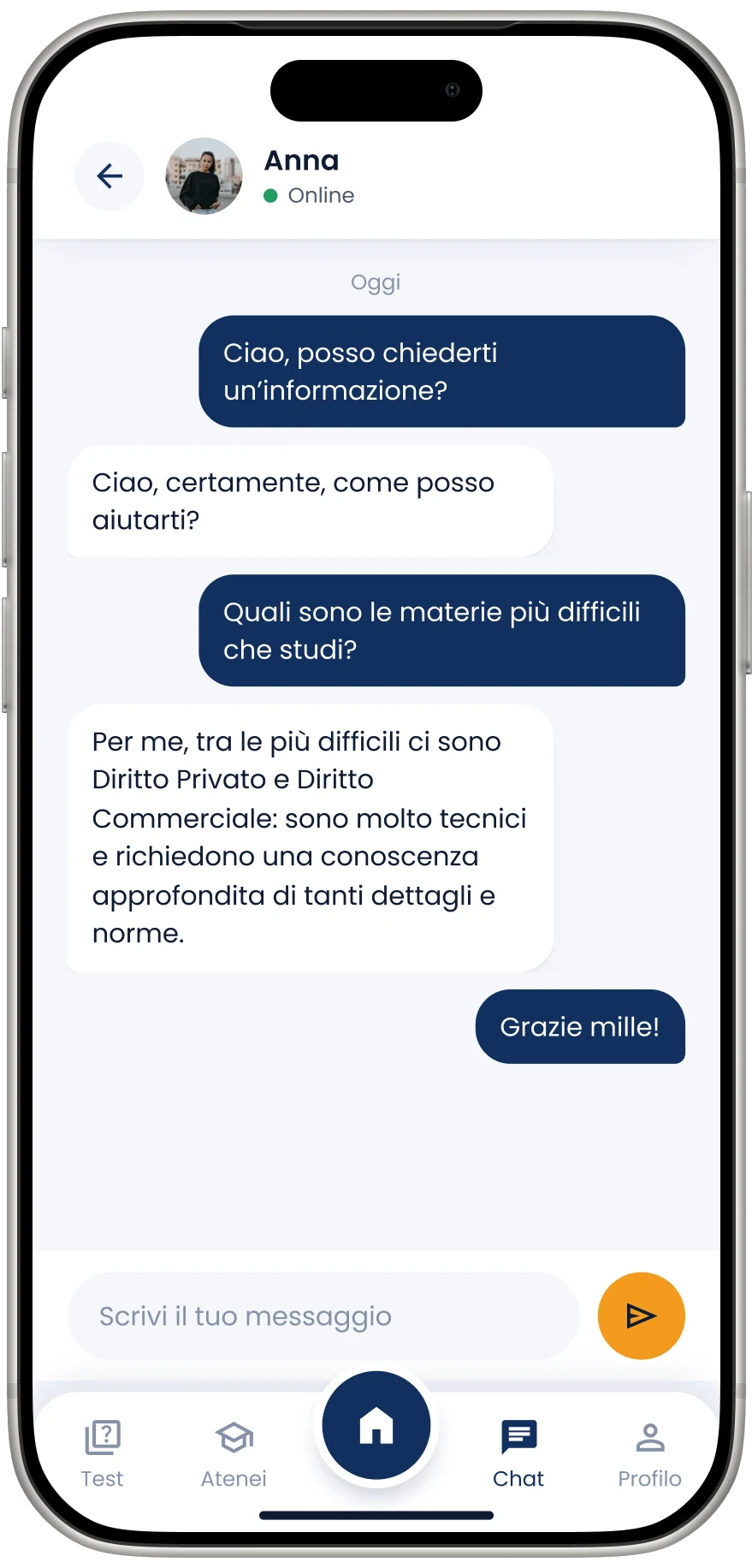
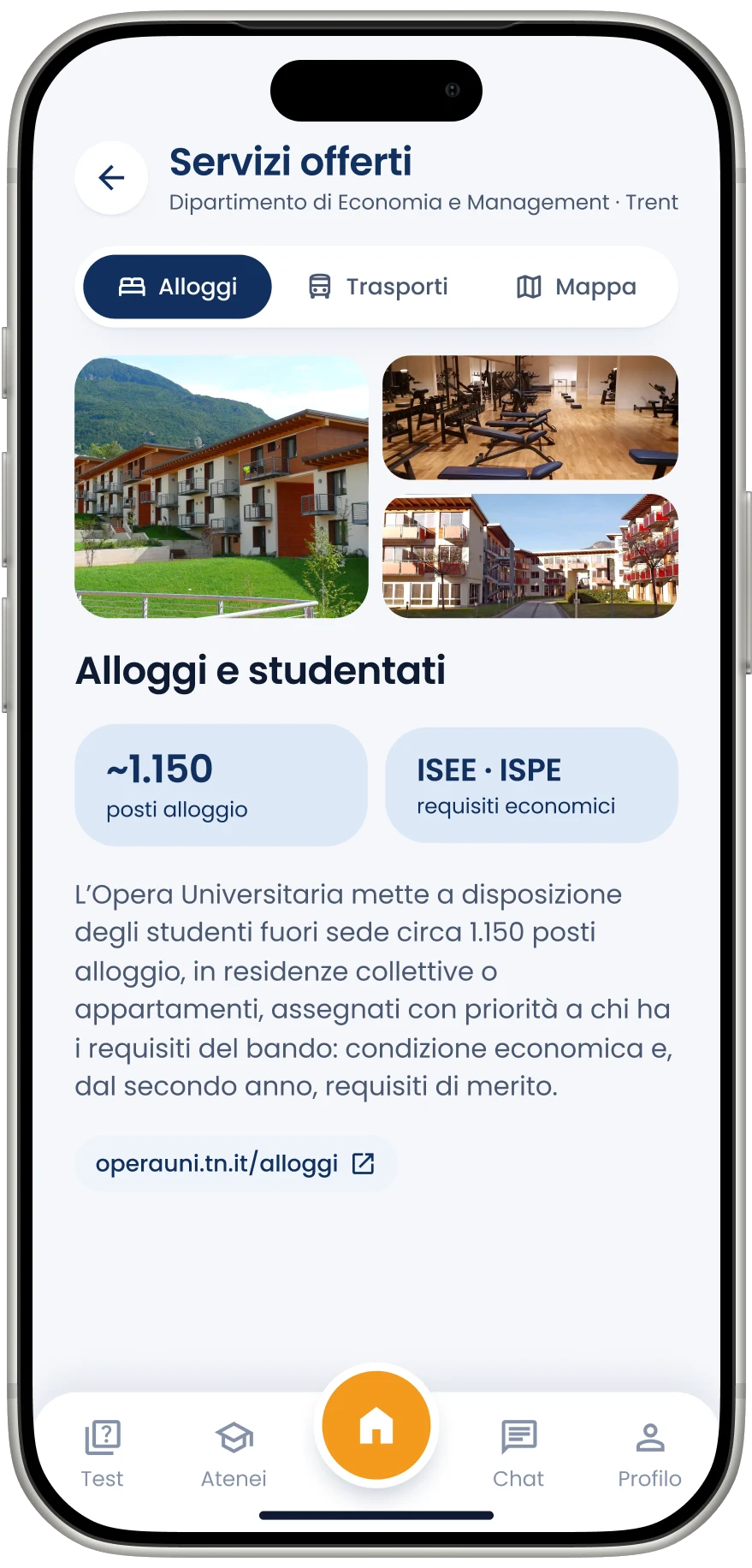
For each university the app explains the required TOLC with a link to CISIA, housing and transport with a route map, and opens a chat with students already enrolled.

  1. The required TOLC, with the link to CISIA
  2. Passes and discounts for students
  3. Route from residence to campus

03/03 Chat

Answers from those already there

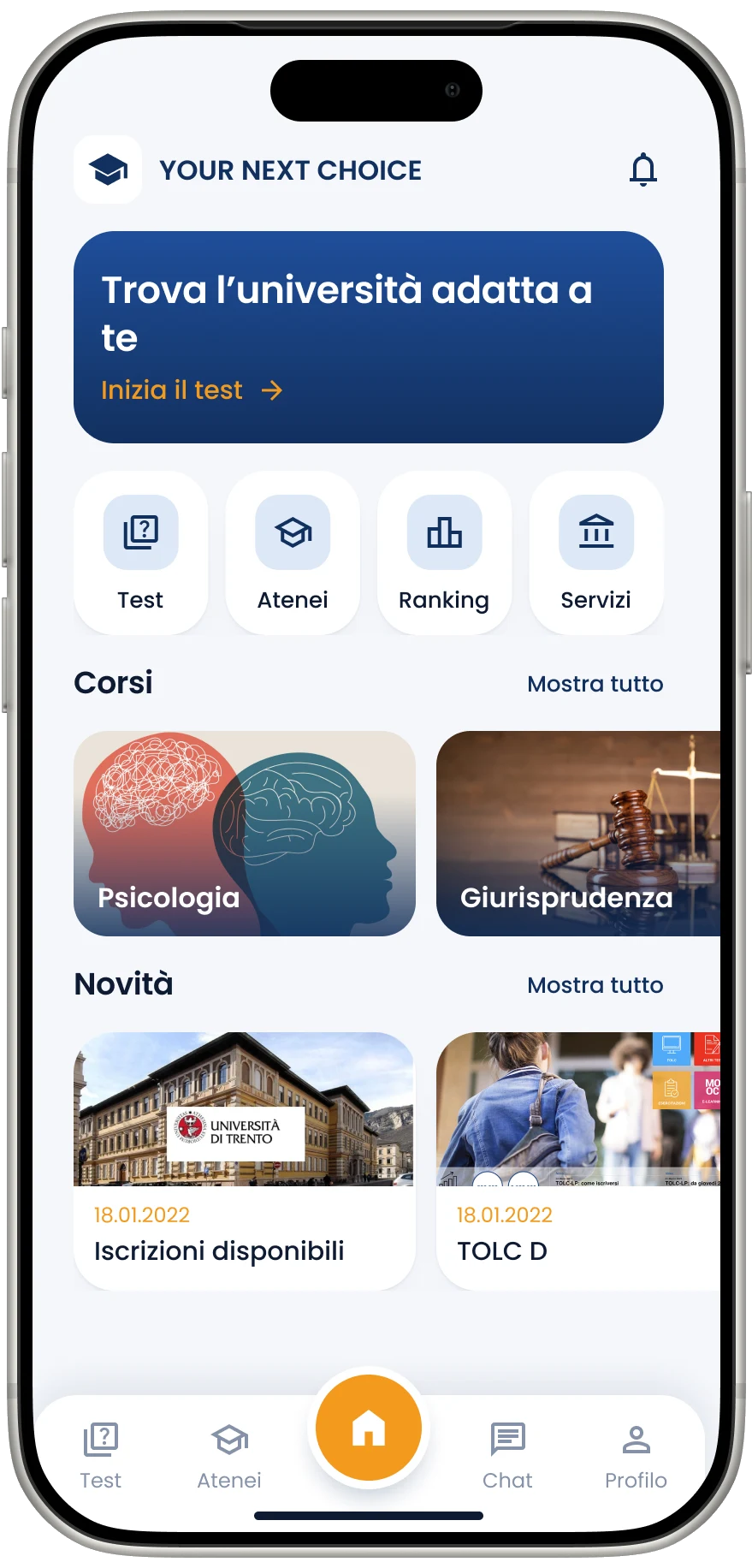
From the home page, tests, universities, rankings and services are one tap away, with news such as open enrolments. The chat puts the student in touch with someone already on that course: direct answers that go beyond official information.

  1. Test, universities, ranking and services
  2. News, such as open enrolments
  3. A chat with a current student

05 · The outcome

A complete orientation journey

What I delivered

From the first question to the chat with a current student: one place that reduces uncertainty and the risk of changing course in the first year.

What I learned

A questionnaire, four interviews and four CPS cycles came before a single screen. Reframing the problem until I found the real client, final-year students, taught me to question the brief before answering it.
Next project 04Cat​CareApp and smart-device ecosystem · 2024

(03) Contact

And you, what do you need?

UX/UI internships and a master’s

I am looking for internships and collaborations as a UX/UI designer, and a master’s programme starting in autumn 2027. Get in touch.